
Industry News
 24 2026-08
 A Practical Guide to Low-grit Sandpaper Selection for Metal Sanding
In metal sanding operations, low-grit sandpaper is an essential consumable for quickly removing material, eliminating weld spatter, removing rust, and smoothing rough surfaces. Its grit range generally spans from P24 to P120, and the specific choice depends on the sanding equipment, metal hardness, and stage of the process.
 18 2026-08
 Assessing a Sandpaper Factory: Stable Supply and Modification of Aluminum Oxide Sandpaper Automotive
Aluminum oxide is a widely used base abrasive in aluminum oxide sandpaper automotive, but products with the same grit designation can vary significantly between factories in terms of cutting efficiency, wear resistance, and batch consistency.Therefore, evaluating the true capability of a sandpaper factory should not stop at the appearance of the finished product; it should trace upstream, starting from several key stages.
 10 2026-08
 Why Ceramic Abrasive Wet-Sanding Sandpaper Excels on Soft Varnish
In automotive paint refinishing, sanding soft clear coats often places higher demands on sandpaper than sanding intermediate coats or body filler. The clear coat layer is thin and relatively soft, with a narrow tolerance window for temperature and pressure; any loss of control during the process can lead to sanding through the coat or whiteout, resulting in rework. In this context, wet-sanding sandpaper with ceramic abrasives is gradually being adopted as standard equipment in more paint shops.
 07 2026-08
 Paint Finishing with High-Grit Sandpaper: Selection Criteria and Progression Tips
Fine sanding of sheet metal paint surfaces is a transitional step in the painting process that bridges spray coating and polishing. In this process, the selection of high-grit sandpaper directly affects the efficiency of fine sanding and the final gloss level. So, what are some tips for selecting the right sandpaper?
 31 2026-07
 How to Tell When Your Water-resistant Sandpaper Has Failed in Wet Sanding?
Throwing it away seems wasteful, but continuing to use it raises concerns about potential problems. Determining whether a sheet of water-resistant sandpaper has lost its effectiveness isn't a matter of estimating how long it's been used, but rather of recognizing several signs that gradually appear during use.
 31 2026-07
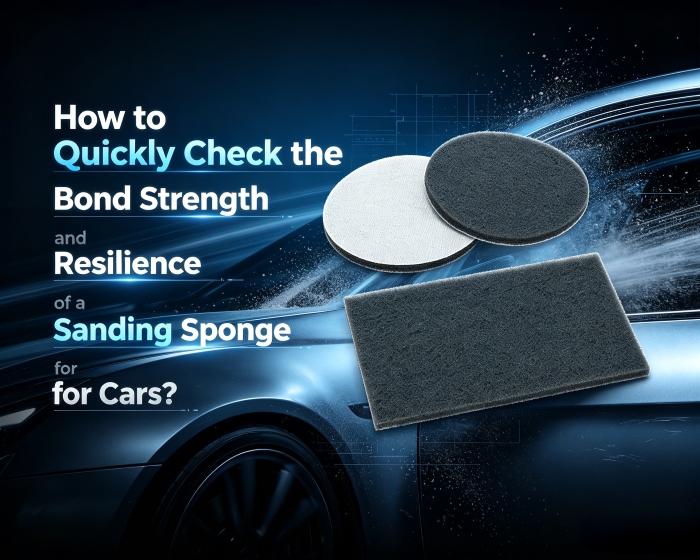
 How to Quickly Check the Bond Strength and Resilience of a Sanding Sponge for Cars?
In the body shop, when technicians pick up a new sanding sponge for cars, their focus is often not on whether the grit size is correct, but rather on whether the abrasive will fall off after just a few uses and whether the sponge will collapse or deform after being compressed a few times. These two issues directly affect sanding efficiency and surface finish, yet they're difficult to discern just by looking at the sponge's appearance.