Do ceramic abrasive PSA sanding discs lose their grit quickly?
Written by: DMS editor
Published on: June 15, 2026
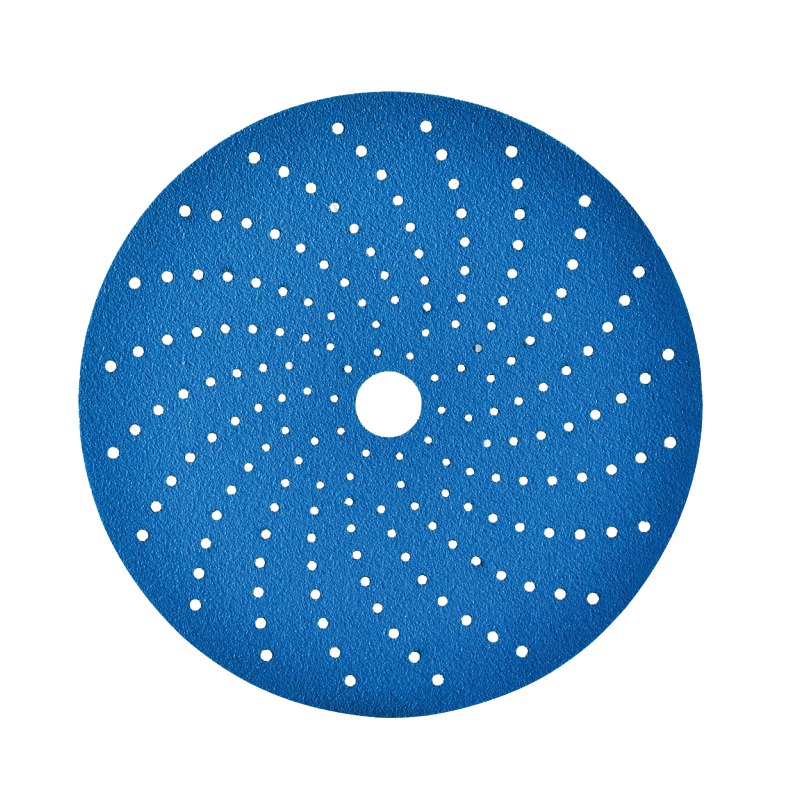
The perception that the grit wears off quickly is a misconception; in fact, ceramic abrasive PSA sanding discs shed the least. When repeatedly sanding flat surfaces, they are among the most durable options on the market. What you should really be concerned about isn’t whether the grit “wears off,” but rather that these discs use a completely different mechanism to eliminate this weakness at its root. Under normal use, you won’t see any grit particles falling off—only extremely fine dust—and the sandpaper itself remains sharp throughout.
Why doesn’t it shed grit?
Conventional alumina or silicon carbide sandpaper operates on an abrasive wear principle. Once the grains become dull, they can no longer cut, so the entire dulled grain must break away from the backing. The significant grit shedding you observe is actually normal wear and tear—the faster it sheds, the faster it renews itself, but the shorter its lifespan.
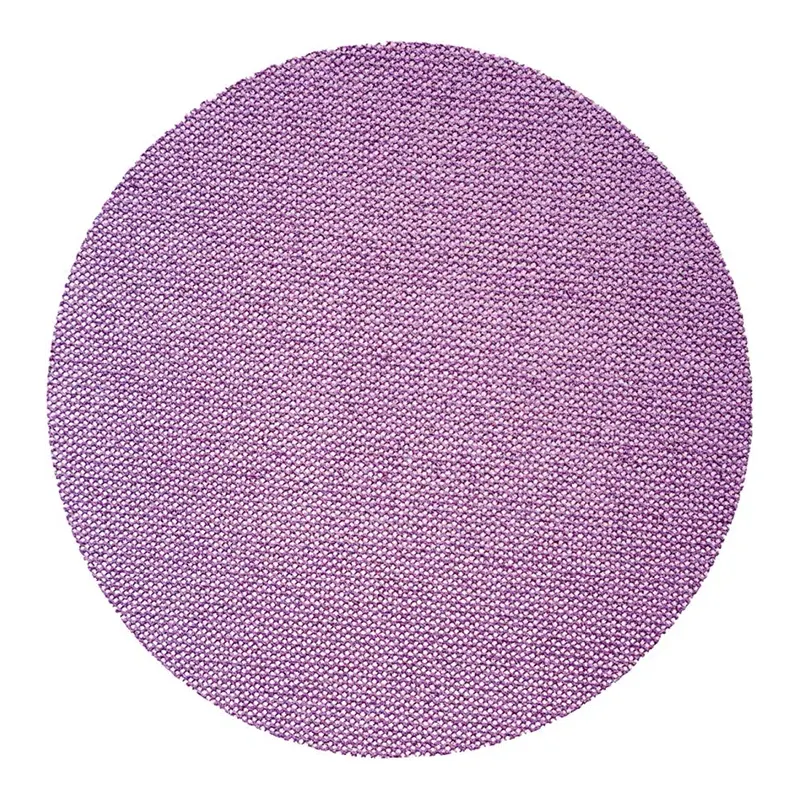
Ceramic abrasive PSA sanding discs follow a self-sharpening mechanism. The grain structure resembles a mille-feuille pastry. Under sanding pressure, rather than shedding whole grains, the grains fracture from within, causing the outer layer to splinter and reveal new, sharper cutting edges. It maintains its sharpness by continuously “fracturing” new edges, while the grain body remains embedded in the backing adhesive. Therefore, you won’t see large grains falling off; only extremely fine dust—the product of fracturing—not the result of whole grains wearing away.
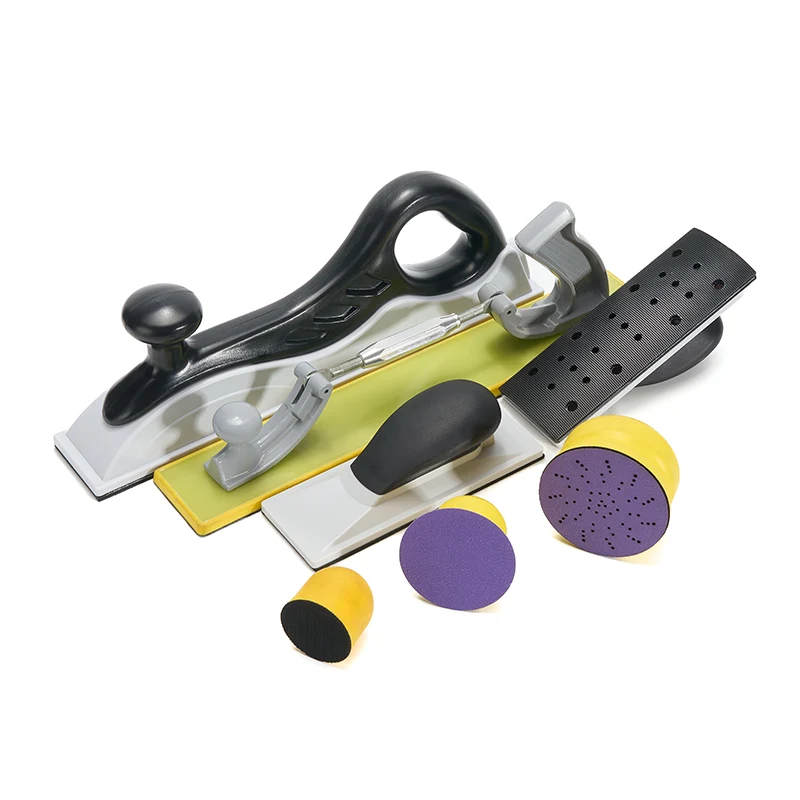
The self-adhesive structure further enhances this advantage. The sandpaper adheres flatly to a rigid backing plate without air bubbles or voids, ensuring stress is evenly distributed across every abrasive grain. This prevents the adhesive fatigue and block-like sand loss caused by suspended edges when using traditional clamps. The rigid system ensures each grain is subjected only to normal compression and tangential cutting, rather than being snapped off laterally.
Under what circumstances does grit loss occur? Cases mistakenly identified as “grit loss”
First, extreme mechanical impact. When sanding welds or sharp edges with forceful impacts, even ceramic abrasive PSA sanding discs with the strongest self-sharpening layers may experience overload and chipping. This is due to improper use, not a defect in the sandpaper.
Second, misinterpretation of adhesive failure. Prolonged dry grinding under heavy pressure can generate high temperatures that soften the adhesive, causing the edges of the sanding disc to curl up and tear off adhesive-coated fragments. This is a matter of selecting the appropriate temperature-resistant adhesive grade, not abrasive shedding; using a high-temperature adhesive can prevent this.
Third, prolonged grinding while submerged in water. Although some models of ceramic abrasive PSA sanding discs are suitable for wet grinding, prolonged immersion combined with high-speed reciprocating motion causes water to penetrate the bonding layer, leading to gradual hydrolysis and accelerating the detachment of abrasive grains from the backing. For non-professional wet-grinding models, dry grinding or light dampening is recommended.
The fact that one sanding disc outperforms five to ten sheets of sandpaper is a physical reality determined by the material mechanism of ceramic abrasive PSA sanding discs. Ordinary sandpaper relies on “shedding grit to maintain cutting edge,” while ceramic abrasives rely on “self-sharpening through fragmentation”—the former becomes shorter with use, while the latter becomes sharper. Next time you stand in front of a sandpaper rack, don’t just compare the texture; flip it over and check the abrasive type—the answer is right there.
DMS Notes on Application Areas
Ceramic abrasive PSA sanding discs are suitable for grinding metal welds, leveling automotive body filler, thickness-grinding and primer sanding in woodworking, as well as surface finishing of hard materials such as fiberglass and carbon fiber. However, due to their high rigidity, they are inherently unsuitable for curved surfaces or sanding tasks requiring flexible contact.
Related News
- How to Tell When Your Water-resistant Sandpaper Has Failed in Wet Sanding?
- How to Quickly Check the Bond Strength and Resilience of a Sanding Sponge for Cars?
- Ultra-Fine Sandpaper in Auto Refinishing: Tips for Edge Safety and Consistent Finish
- Beyond Samples: How to Confirm Production Consistency from Your Pneumatic Sandpaper Supplier
- Automotive Sandpaper Manufacturer Recommendation | Dry & Wet Sanding, Round & Square Sheets, Direct Source Factory
- A Must-Read Checklist for Purchasing Professionals: How to Avoid Sandpaper Manufacturers with Unstable Sandpaper Production?
Leave me a message