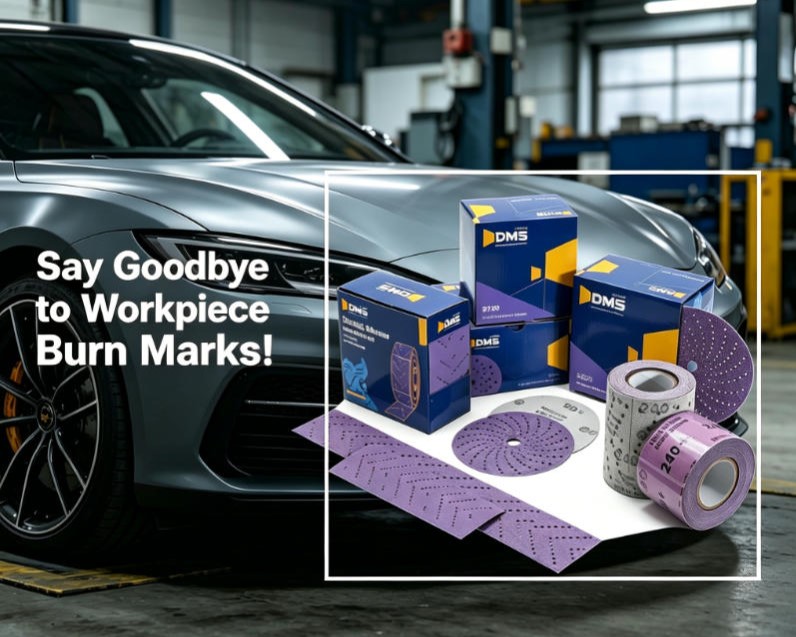
How Do Blue Film Abrasive Discs Improve Sanding Efficiency?
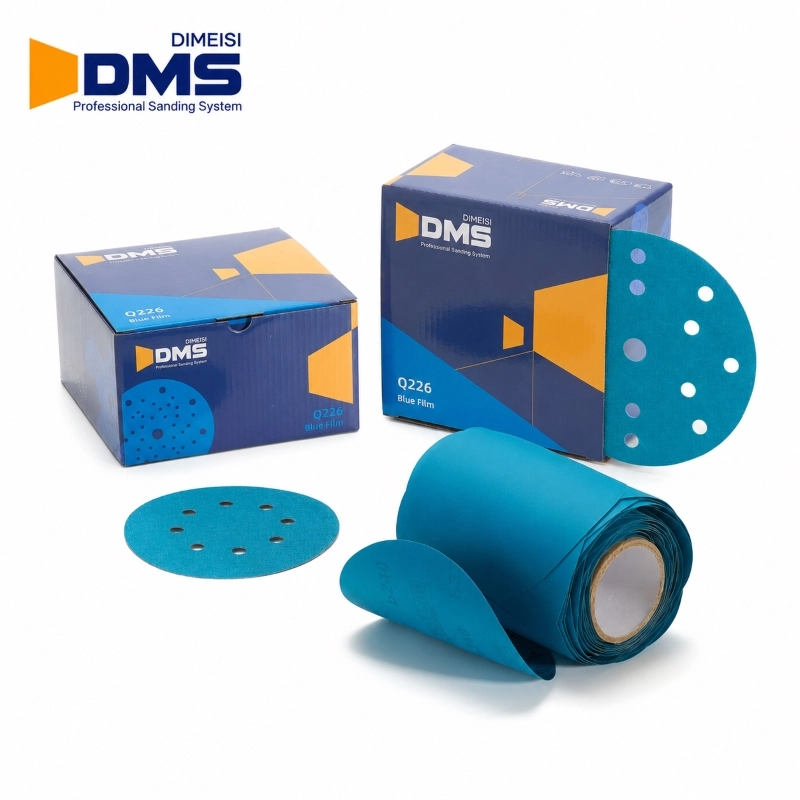
Sanding efficiency depends on more than abrasive sharpness. Grain consistency, backing stability, dust extraction, and resistance to clogging all affect how quickly a surface can be prepared and how much rework is required. At DMS (Dongguan King Abrasives Co., Ltd.), we developed the Q226 Blue Film Abrasive Disc with mixed ceramic abrasives and a durable PET film backing to deliver strong cutting performance, consistent scratch patterns, and longer service life. With multiple grit grades and hole configurations, it supports automotive refinishing, metal preparation, composite sanding, and other demanding surface finishing operations.
Table of Contents
- What Determines Sanding Efficiency?
- How Mixed Ceramic Abrasives Improve Cutting Performance
- Why PET Film Backing Matters
- How Anti-Clogging and Dust Extraction Extend Disc Life
- Q226 Blue Film Abrasive Disc Specifications
- Where Can Blue Film Abrasive Discs Be Used?
- How to Choose the Right Grit
- Frequently Asked Questions
What Determines Sanding Efficiency?
In professional sanding operations, efficiency is not simply a matter of removing more material in less time. We also consider scratch uniformity, abrasive consumption, surface temperature, dust accumulation, and the amount of additional work required before the next processing stage.
For example, during automotive body repair, technicians may need to remove old paint, level body filler, smooth primer, and prepare the surface for refinishing. If an abrasive disc loses its cutting ability too quickly, operators often increase pressure or replace discs more frequently. Both situations can interrupt production and affect surface consistency.
We designed the DMS Q226 Blue Film Abrasive Disc to address these practical issues through several coordinated features:
- Mixed ceramic abrasive grains for strong cutting performance and self-sharpening action.
- PET film backing for improved toughness and dimensional stability.
- Optimized open-coat construction to reduce abrasive loading.
- Multiple hole configurations to support effective dust extraction.
- A wide grit selection from P40 to P2500 for different sanding stages.
These features work together. A sharp abrasive grain alone cannot guarantee a consistent result if the backing tears easily or sanding dust accumulates between the grains.
How Mixed Ceramic Abrasives Improve Cutting Performance
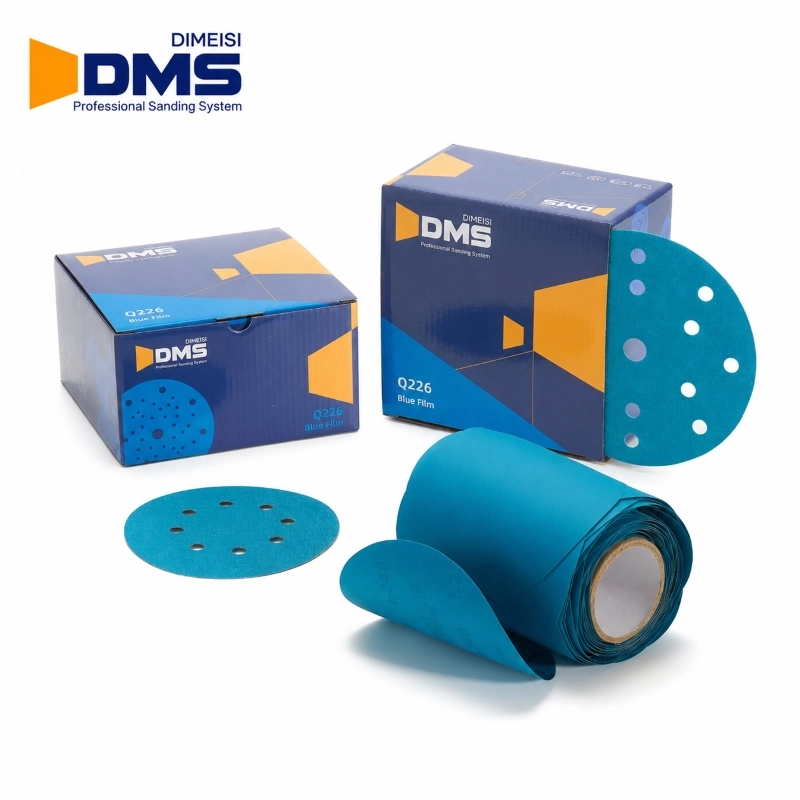
The abrasive grain is one of the main factors determining how a sanding disc performs. Our Q226 Blue Film uses high-standard mixed ceramic abrasives combined with high-quality aluminum oxide. This abrasive structure is designed to maintain cutting ability during extended sanding operations.
Ceramic abrasive grains have a self-sharpening characteristic. Under suitable grinding conditions, worn grain edges can fracture in a controlled manner, exposing new sharp cutting points. This helps the disc maintain effective material removal instead of gradually losing cutting force as the abrasive surface wears.
In practical applications, stable cutting performance is particularly important when removing coatings, leveling body filler, or preparing metal surfaces. Operators can maintain a more consistent sanding process without frequently compensating for declining abrasive sharpness.
Another important consideration is scratch consistency. Uneven abrasive distribution can create isolated deep scratches that become visible after subsequent coating or polishing stages. We focus on uniform grain distribution and coating control to produce consistent sanding marks and reduce the risk of additional surface correction.
Why PET Film Backing Matters in Sanding Operations
The backing material directly affects how an abrasive disc responds to pressure, vibration, and contact with the workpiece. Compared with conventional paper backing, PET film offers good toughness, tear resistance, and surface stability.
We use PET film as the backing material for Q226 because it provides a stable foundation for the abrasive coating. During machine sanding, this helps maintain more uniform contact with the workpiece and supports consistent scratch patterns.
The modified film substrate also works with the hook-and-loop attachment system to provide a secure connection to the sanding pad. This is particularly useful in power and pneumatic sanding applications, where vibration and rotational movement can affect disc stability.
Q226 also offers water resistance, allowing it to be used in both wet and dry sanding operations when the selected process and equipment are suitable. Its toughness and tear resistance make it a practical option for automotive refinishing, metal preparation, and other industrial surface treatment work.
How Anti-Clogging and Dust Extraction Extend Disc Life
Abrasive loading is a common problem when sanding materials such as automotive paint, body filler, primer, and certain composites. Fine sanding particles can accumulate between abrasive grains, covering their cutting edges and reducing material removal efficiency.
To address this issue, we optimize the coating structure and use a special anti-clogging design. The open-coat arrangement provides more space between abrasive grains, helping reduce the accumulation of sanding debris during operation.
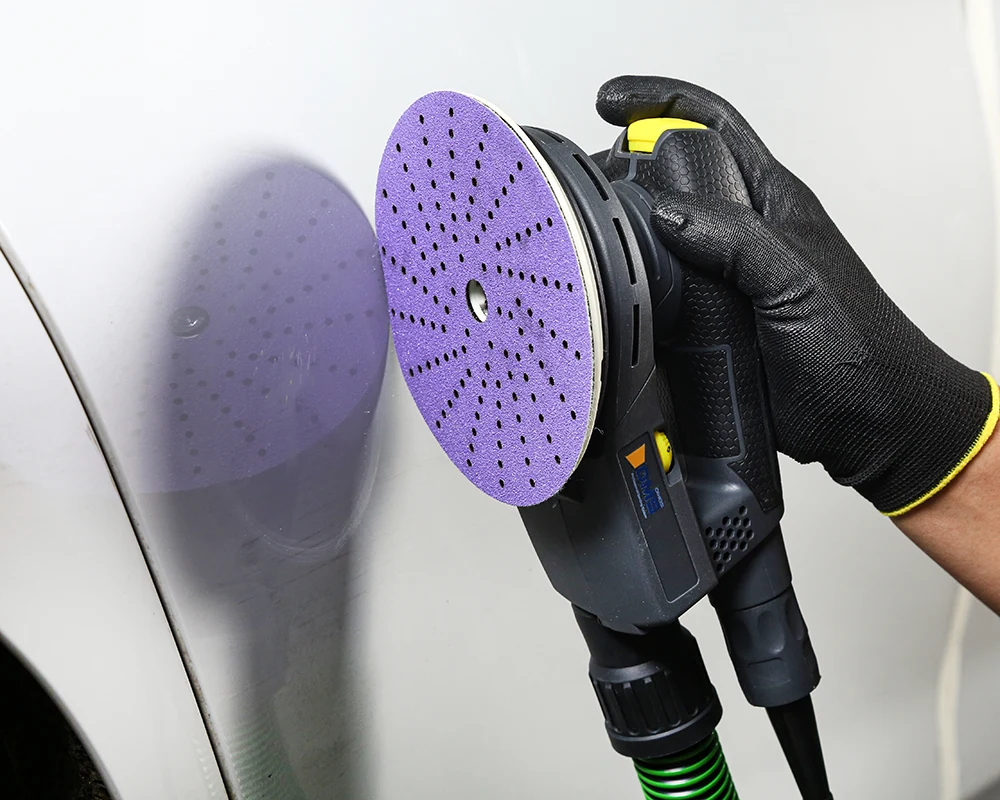
Dust extraction is another important part of the process. Q226 Blue Film Abrasive Discs are available with multiple hole configurations. When matched with a compatible perforated sanding pad and vacuum extraction system, these openings help remove sanding dust from the contact area.
Effective dust removal offers several practical benefits:
- Reduces dust accumulation on the abrasive surface.
- Helps maintain more stable cutting performance.
- Improves visibility of the sanding area.
- Reduces airborne dust exposure when used with suitable extraction equipment.
- Helps extend abrasive service life by limiting premature loading.
We recommend matching the disc hole pattern with the sanding machine and backing pad. A multi-hole disc cannot deliver its intended dust extraction performance if the pad openings are blocked or incorrectly aligned.
Q226 Blue Film Abrasive Disc: Technical Specifications
For distributors, automotive refinishing suppliers, and industrial abrasive users, technical specifications are important when comparing products and planning production requirements. The following table summarizes the main specifications of our Q226 Blue Film Abrasive Disc.
| Parameter | Specification |
|---|---|
| Product Name | Q226 Blue Film Abrasive Disc |
| Color | Blue |
| Abrasive Grain | Mixed Ceramic Abrasives |
| Backing Material | PET Film |
| Attachment | Hook & Loop / PSA |
| Coating Structure | Open Coat |
| Grit Range | P40–P2500 |
| Sanding Method | Wet and Dry Sanding |
| Key Characteristics | Self-Sharpening, Anti-Clogging, High Cutting Force, Tear Resistance |
| Hole Configuration | Multiple Hole Patterns Available |
Available Grit Options
Q226 covers a broad range of sanding requirements, from aggressive material removal to fine surface finishing.
| Grit Category | Available Grits | Typical Sanding Purpose |
|---|---|---|
| Coarse | P40, P60, P80 | Heavy material removal and rough surface preparation |
| Medium | P100, P120, P150, P180, P220, P240 | Body filler shaping and intermediate sanding |
| Fine | P320, P400, P500, P600 | Primer leveling and surface refinement |
| Very Fine | P800, P1000, P1200 | Fine surface preparation and finishing |
| Extra Fine | P1500, P2000, P2500 | Fine finishing and paint surface refinement |
The appropriate grit depends on the substrate, coating condition, and required surface finish. Operators should follow a progressive grit sequence rather than skipping several grades, especially when preparing surfaces for painting.
Where Can Blue Film Abrasive Discs Be Used?
The combination of ceramic abrasive grains, PET film backing, and anti-clogging performance makes Q226 suitable for a range of professional sanding applications. We focus on applications where cutting efficiency, surface consistency, and abrasive durability are important.
Automotive Refinishing and Collision Repair
In automotive repair workshops, the disc can be used for sanding body filler, removing old paint, leveling primer, and preparing vehicle panels for refinishing. The consistent scratch pattern is particularly useful when the surface will receive additional primer or paint coatings.
Bus, Marine, and Aerospace Surface Preparation
Large vehicle panels and composite components often require controlled sanding across broad surfaces. The PET film backing provides good tear resistance, while the multiple grit options allow operators to select different grades for material removal and surface preparation.
Metal and Industrial Grinding
For metalworking operations, the abrasive disc can support surface cleaning, coating removal, and general surface preparation. The required grit should be selected according to the metal type, material removal allowance, and subsequent finishing process.
Woodworking and Composite Processing
In furniture manufacturing and composite processing, sanding consistency is important for achieving a uniform surface before coating or bonding. Q226 can be selected for suitable wood and composite sanding operations, with finer grits used for surface refinement.
How to Choose the Right Blue Film Abrasive Disc
Selecting an abrasive disc should start with the material and processing stage rather than the grit number alone. We generally recommend evaluating four factors before confirming a product specification.
- Workpiece material: Identify whether the application involves body filler, paint, metal, wood, or composite material.
- Material removal requirement: Use coarser grits for heavier removal and progressively finer grits for surface refinement.
- Dust extraction system: Match the disc's hole pattern with the sanding pad and vacuum equipment.
- Attachment requirements: Confirm whether hook-and-loop or PSA attachment is suitable for the existing sanding equipment.
We also recommend testing the selected grit on a sample workpiece before moving to full-scale production. This helps verify cutting speed, scratch depth, surface quality, and abrasive consumption under actual operating conditions.
How DMS Supports Coated Abrasive Manufacturing
At DMS (Dongguan King Abrasives Co., Ltd.), our experience in the coated abrasives industry dates back to 1997. We transitioned from trading to manufacturing in 2001 and have continued to develop our production capabilities around the needs of automotive, furniture, metalworking, and industrial customers.
Our product range covers both jumbo abrasive rolls and converted finished products. With multiple production lines and in-house raw material design and development capabilities, we manage different stages of the manufacturing process, from material selection and abrasive coating to converting and finished-product inspection.
For Q226 Blue Film Abrasive Discs, we pay attention to abrasive grain consistency, coating quality, backing stability, and finished-product performance. Our quality control process includes incoming raw material inspection, production-stage checks, and finished-product inspection before packaging.
We also provide customized services for customers with specific finishing requirements. Depending on the project, we can discuss grit selection, product dimensions, hole patterns, attachment types, and other product specifications to match the intended sanding process.
For more information about our product range, visit our Film Abrasive Discs page or explore our Ceramic Abrasives solutions.
Frequently Asked Questions
1. What makes a Blue Film Abrasive Disc different from a conventional paper sanding disc?
A Blue Film Abrasive Disc uses PET film backing instead of conventional paper. PET film offers good toughness, tear resistance, and dimensional stability, helping maintain consistent contact with the workpiece during machine sanding.
2. How do mixed ceramic abrasives improve sanding efficiency?
Mixed ceramic abrasives provide strong cutting performance and self-sharpening action. As worn abrasive grains fracture under suitable sanding conditions, new cutting edges are exposed. This helps maintain cutting efficiency and reduce premature abrasive wear.
3. Can Q226 Blue Film Abrasive Discs be used for wet sanding?
Yes. Q226 has water-resistant properties and is suitable for both wet and dry sanding. The sanding method should be selected according to the workpiece material, coating system, and equipment requirements.
4. What grit range is available for DMS Q226 Blue Film?
Q226 is available from P40 to P2500. Coarse grades are suitable for heavier material removal, while finer grades support primer preparation, surface refinement, and finishing operations.
5. Does the multi-hole design improve dust extraction?
Yes. Multiple hole patterns allow users to select a configuration compatible with their sanding pads and dust extraction systems. When properly matched with vacuum equipment, the design helps remove sanding dust and reduce abrasive loading.
6. Which attachment options are available?
Q226 supports hook-and-loop and pressure-sensitive adhesive (PSA) attachment options. The suitable type depends on the sanding machine, backing pad, and operating requirements.
7. Can DMS provide customized coated abrasive products?
Yes. With our manufacturing and product development capabilities, DMS can discuss customized abrasive specifications, including grit selection, dimensions, hole patterns, and attachment options. Requirements can be evaluated according to the intended application and production conditions.
8. How can I select the right abrasive disc for automotive refinishing?
Start by identifying the sanding stage, substrate, and required surface finish. Coarse grits are generally used for filler shaping and paint removal, medium grits for intermediate preparation, and fine grits for primer leveling and finishing. Always confirm the grit sequence through a sample test before production use.
Conclusion
Improving sanding efficiency requires a combination of cutting performance, backing stability, anti-clogging capability, and effective dust extraction. The DMS Q226 Blue Film Abrasive Disc brings these features together through mixed ceramic abrasives, PET film backing, open-coat construction, and multiple hole configurations.
With grit options ranging from P40 to P2500, it provides flexibility for automotive refinishing, collision repair, metal preparation, and other surface finishing applications. Backed by our coated abrasive manufacturing experience since 1997, DMS continues to develop practical abrasive solutions for different industrial sanding requirements.
Related News
- How to Evaluate a Waterproof Sandpaper Factory’s Quality Control for Long-Term Supply
- Will Ceramic Sandpaper Burn Your Paint? What to Know Before You Sand
- Wet Sanding Troubleshooting: Finishing Abrasives Backing Softening and Delamination
- How Do High-Temperature Resistant Automotive Sandpaper Rolls Benefit Auto Body Sanding?
- Getting Wave Marks? Issues to Check When Using Pneumatic Sandpaper
- What Are the Benefits of Eco-Friendly Ceramic Sandpaper for Low-Dust Sanding?
Leave me a message


News Recommendations