Sandpaper Procurement: Which Sandpaper Factory Is Reliable for Purchasing Sandpaper Supplies for Auto Repair and Carpentry?
You receive a batch of samples: they cut quickly, wear evenly, and the technicians give their approval. You place a bulk order, but three weeks into production, sandpaper of the same grit clogs up after just a few uses, the backing tears as soon as it bends on a curved surface, and the rework rate skyrockets. Does this scenario sound familiar?
This is the gap between factories that can produce “good samples” and those that can deliver “consistent, stable quality at scale.” In the auto repair and woodworking industries, sandpaper turns over faster than other consumables—and this gap is where profits are eroded. The following four aspects distinguish a reliable sandpaper factory from ordinary ones.
1. Anti-clogging Design and Dust Management
What causes sandpaper to wear out the fastest? Auto repair technicians almost always cite clogging. Putty dust and primer particles become embedded in the sandpaper’s surface, turning it into a useless, smooth sheet in just a few minutes. Manufacturers who take this issue seriously will provide clear technical solutions. These typically involve a stearate-based anti-clogging coating combined with self-sharpening abrasives that shed as they wear. This combination ensures that debris falls off during the sanding process rather than accumulating on the sandpaper surface.
When screening potential suppliers, choose a sandpaper factory that can clearly explain the coating’s principles and provide test records—this indicates they treat anti-clogging as a core competitive advantage, rather than a mere afterthought.
2. Abrasive Quality and Self-Sharpening Behavior
The abrasive determines whether the sanding belt is cutting or merely rubbing. When working with the hard body fillers commonly used in auto repair or the hardwoods used in furniture manufacturing, standard aluminum oxide abrasives dull rapidly. Once the cutting edges become rounded, the operator tends to apply more pressure, leading to heat buildup, paint blistering, and scorched wood.
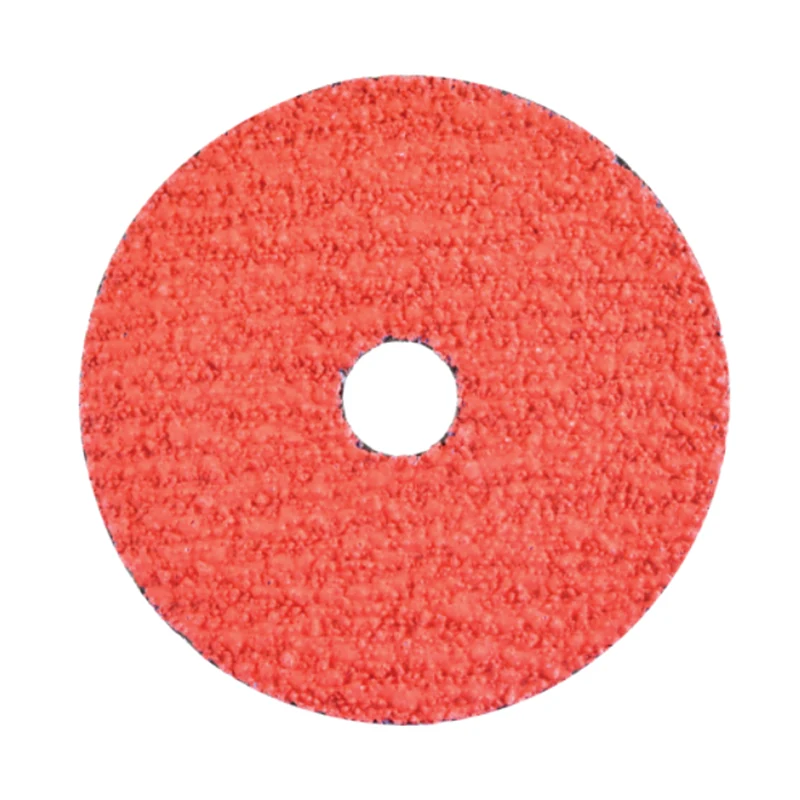
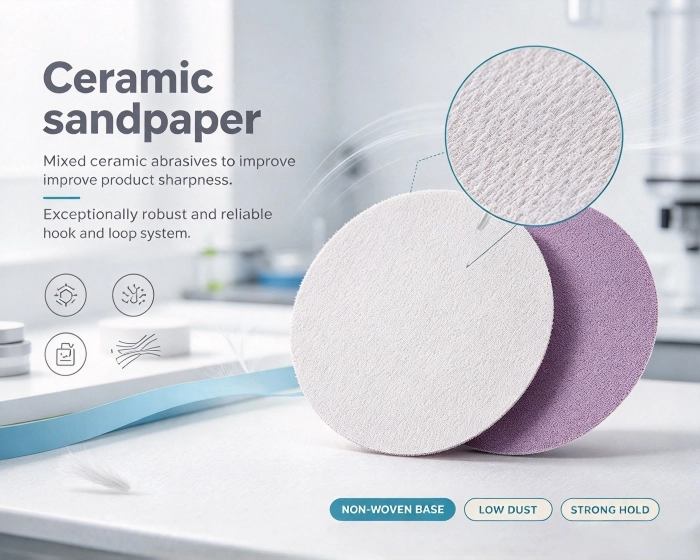
Looking for a sandpaper factory with solid experience in ceramic aluminum oxide abrasive technology? In properly engineered ceramic abrasives, dulled microcrystals fracture microscopically, continuously exposing sharp new edges. This self-sharpening cycle significantly extends the effective cutting window. DMS’s ceramic abrasive series is built around this principle, designed to reduce the number of sheet changes per operation by maintaining long-lasting sharpness.
3. Backing Material and Joint Integrity
Auto repair technicians bend sandpaper to fit tight contours, while woodworking belt sanders operate at high speeds under high tension. Both scenarios are relentless on weak backing materials. A reliable sandpaper factory selects paper, cloth, or composite backing materials based on specific applications and treats sanding belt splices as a precision process. Poor-quality splices immediately reveal themselves during operation as rhythmic skipping, leaving hard-to-remove vibration marks on the workpiece.
When evaluating samples, perform a simple bending test: repeatedly fold the sandpaper lengthwise and check the crease areas for excessive grit loss or cracking of the backing. For sanding belts, request an on-machine test to feel how the joint passes through the pressure rollers. These physical tests are far more revealing than the manufacturer’s specification sheet.
4. Batch Consistency and Process Control
It is not difficult to produce a single batch of high-quality products in a laboratory. The real challenge lies in maintaining consistent abrasive distribution, coating thickness, and curing parameters across fifty batches over a twelve-month period. Any variation—such as slight changes in hardness or variations in abrasive adhesion—will be magnified on the production floor, resulting in inconsistent surface quality or premature failure of the sandpaper.
A reputable sandpaper factory will have a documented quality control system covering incoming raw material inspection, process monitoring, and finished product testing. You should review quality control data from three consecutive production batches and compare their consistency. This level of transparency is a reliable indicator of manufacturing discipline.
DMS Editor’s Summary on Selecting a Good Sandpaper Factory
Price and initial samples are necessary conditions, but they are far from sufficient. The four criteria above form an evaluation framework independent of brand and marketing claims, allowing actual test results to determine which manufacturers qualify for your supplier list. Only a sandpaper factory that meets all four criteria is a worthy partner for establishing a long-term supply relationship.
Related News
- Getting Wave Marks? Issues to Check When Using Pneumatic Sandpaper
- What Are the Benefits of Eco-Friendly Ceramic Sandpaper for Low-Dust Sanding?
- What Leads to Peeling of the Waterproof Coating on Wet Sandpaper? Key Usage Tips
- Ceramic Sandpaper vs Silicon Carbide Sandpaper: How to Pick for Your Grinding Job
- Why Anti Static Fine Sandpaper Matters in Electronics Manufacturing
- Is Porous Dust-Collecting Automotive Sandpaper Worth the Switch?
Leave me a message