How Do Laser Holes in Purple Film Grinding Discs Affect Performance?
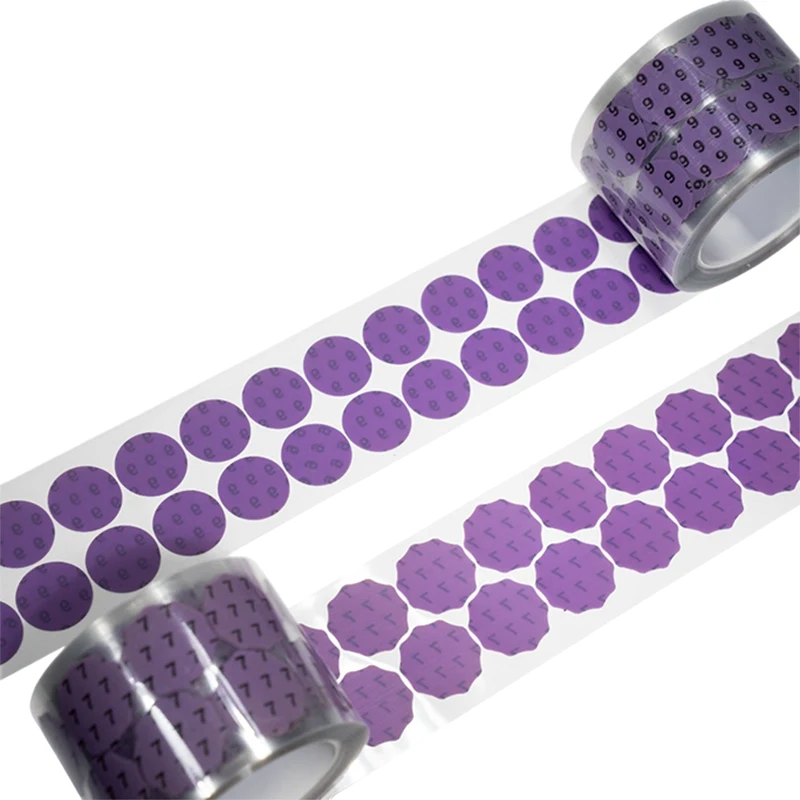
The aperture size, distribution density, and machining precision of laser holes in purple film grinding discs impact actual performance through chip evacuation, heat dissipation, and grinding conformity. Well-designed laser holes enhance grinding efficiency and service life, while poorly designed ones may cause grinding stalls or workpiece scratches. Where exactly do these effects manifest? This article by DMS breaks it down for you.
I. Impact on Chip Removal Efficiency and Workpiece Quality
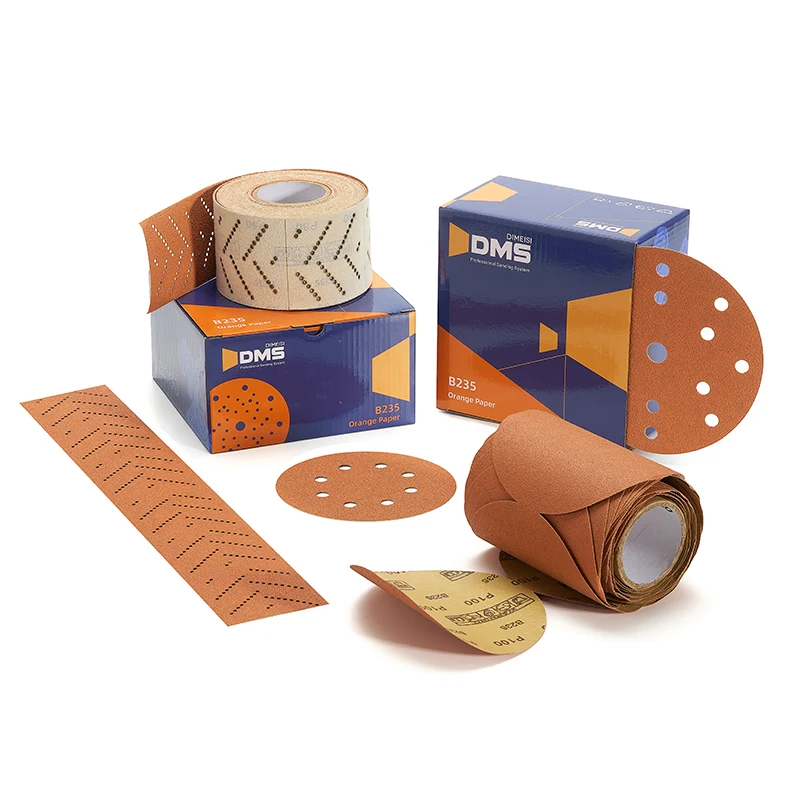
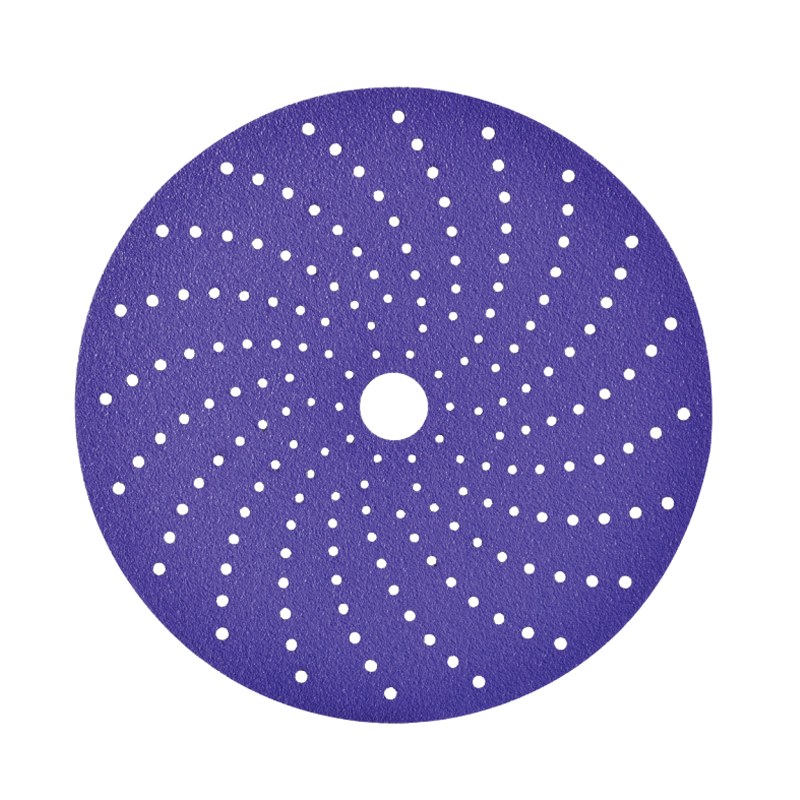
Laser holes serve as the evacuation channels for grinding debris. Holes with rational distribution and appropriate aperture can rapidly expel abrasive particles and workpiece powders, preventing debris accumulation and friction on the abrasive surface. This reduces surface scratches and burrs on the workpiece. Overly dense or undersized laser holes impede chip removal. Residual debris directly compromises surface flatness, particularly in high-chip-generation applications like metal grinding or wood polishing.
II. Aids Grinding Heat Dissipation, Reduces Wheel and Workpiece Wear
Heat generated by grinding friction can soften and deform the purple film grinding wheel base, potentially causing localized overheating and discoloration of the workpiece. Laser holes create airflow channels that dissipate heat from the grinding surface as the wheel rotates. A well-designed hole pattern reduces contact temperatures, minimizes premature abrasive shedding and base degradation, extends wheel lifespan, and mitigates high-temperature effects on workpiece materials.
III. Optimizing Conformity and Load Distribution for Irregular Surface Grinding
Laser holes reduce the rigidity of Purple Film Grinding Discs while enhancing flexibility, enabling better conformity to curved surfaces and irregular contours of complex parts. This minimizes grinding dead zones and improves machining uniformity. Simultaneously, a rational hole distribution disperses grinding forces, preventing localized overloading that could cause edge chipping or cracking. However, excessively dense laser holes diminish the wheel's overall strength, increasing the risk of tearing.
IV. Correlation with Grinding Efficiency and Adaptation to Different Machining Conditions
Laser hole parameters directly influence grinding efficiency. Large-diameter, high-density laser holes offer superior chip removal and heat dissipation, making them suitable for rough grinding and heavy-load applications while reducing grinding resistance. Small-diameter, low-density laser holes provide a larger effective grinding area on the abrasive surface, making them suitable for fine polishing and light-load grinding. This approach yields a smoother surface finish on the workpiece. However, rough edges on laser holes can snag the workpiece, causing surface scratches.
In summary, laser holes directly impact the processing quality, efficiency, and service life of Purple Film Grinding Discs. Their parameter design must be reasonably matched to actual grinding conditions and workpiece materials to achieve optimal wheel performance.
About DMS:
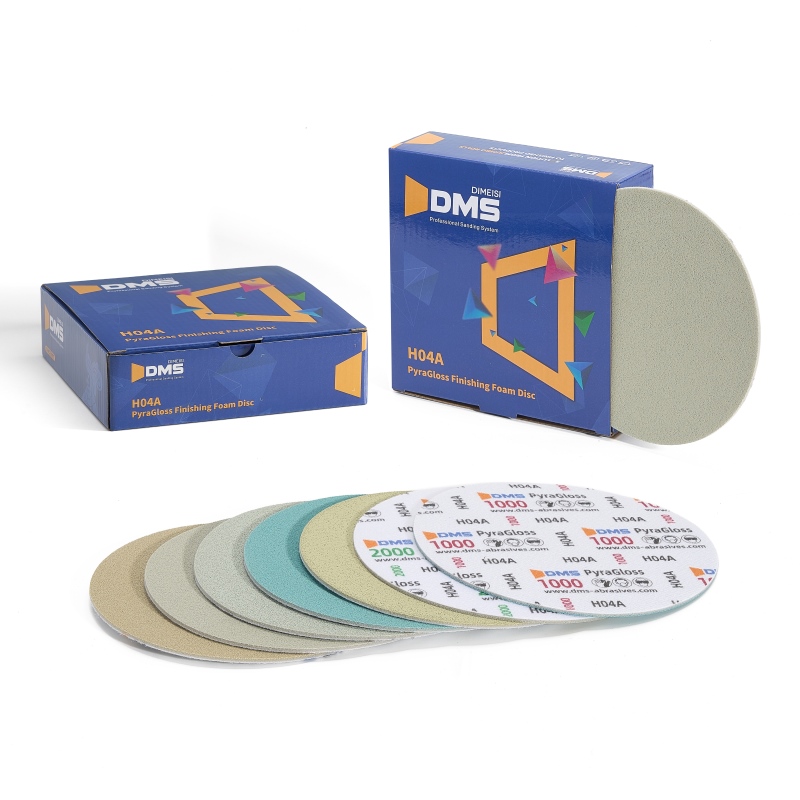
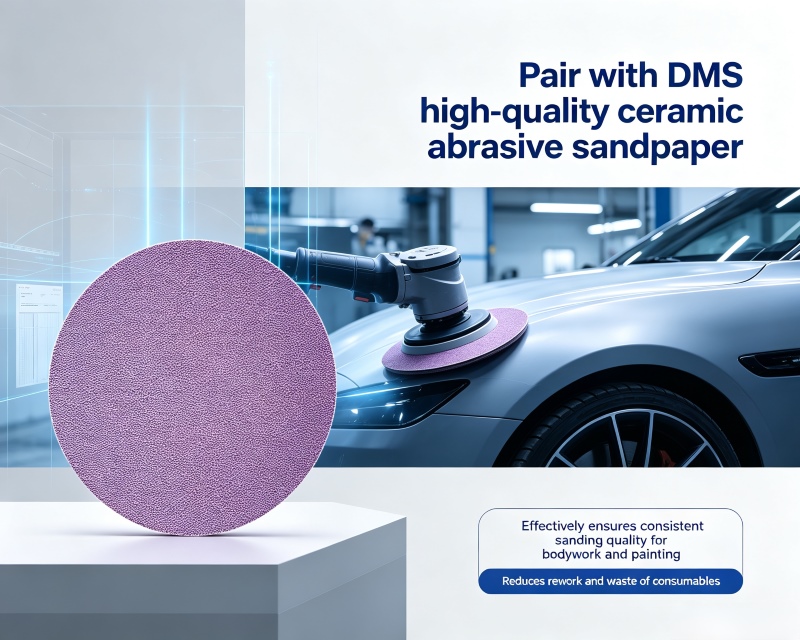
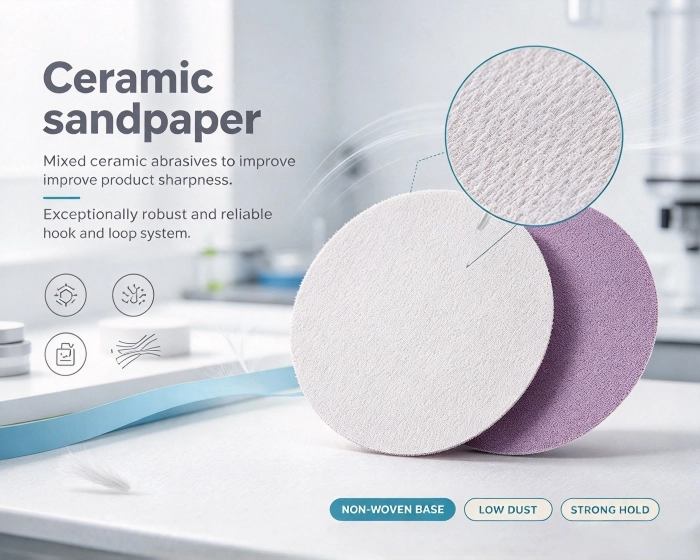
DMS's Q22T Purple Film Grinding Discs utilizes high-standard, premium blended ceramic abrasives. Its self-sharpening properties deliver exceptional cutting power with uniform, consistent scratches, minimizing rework risks. A specially engineered coating ensures extended service life, enabling processing of more workpieces. Multiple hole configurations maximize dust extraction, protecting workers from harmful particulate exposure.
Related News
- Getting Wave Marks? Issues to Check When Using Pneumatic Sandpaper
- What Are the Benefits of Eco-Friendly Ceramic Sandpaper for Low-Dust Sanding?
- What Leads to Peeling of the Waterproof Coating on Wet Sandpaper? Key Usage Tips
- Ceramic Sandpaper vs Silicon Carbide Sandpaper: How to Pick for Your Grinding Job
- Why Anti Static Fine Sandpaper Matters in Electronics Manufacturing
- Is Porous Dust-Collecting Automotive Sandpaper Worth the Switch?
Leave me a message