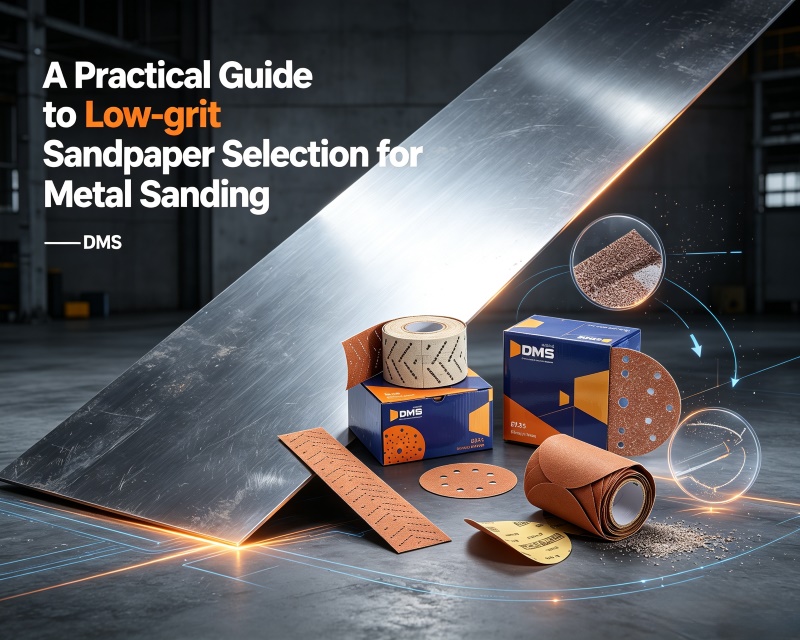
A Practical Guide to Low-grit Sandpaper Selection for Metal Sanding
In metal sanding operations, low-grit sandpaper is an essential consumable for quickly removing material, eliminating weld spatter, removing rust, and smoothing rough surfaces. Its grit range generally spans from P24 to P120, and the specific choice depends on the sanding equipment, metal hardness, and stage of the process. Selecting the right sandpaper can directly improve workshop efficiency and reduce consumable costs.
I. Consider the Abrasive Type First
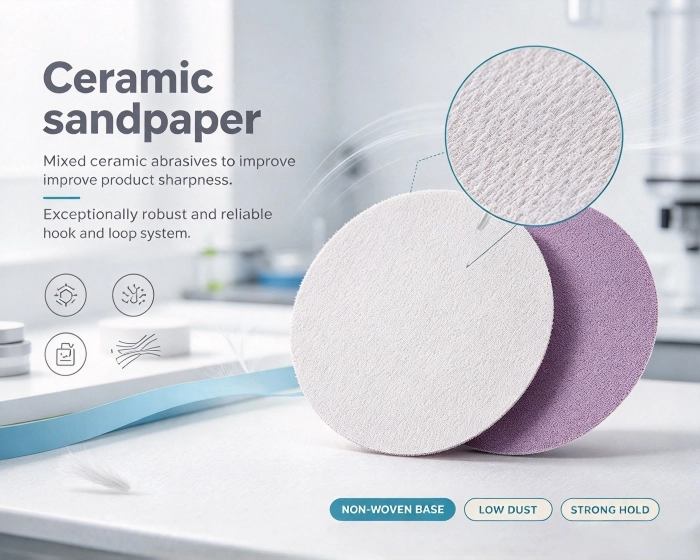
For metal grinding, low-grit sandpaper with ceramic alumina or zirconia corundum abrasives should be prioritized over ordinary brown corundum. Ordinary alumina sandpaper grains dull quickly. When grinding hard metals, they lose their cutting power after just a few passes. Operators may unconsciously apply excessive force, causing the workpiece to overheat and the sandpaper to become unusable. Ceramic aluminum oxide abrasives possess self-sharpening properties. As the grains dull, they fracture microscopically and continuously expose new cutting edges. This maintains sharp cutting performance for an extended period, making them particularly suitable for hard metals such as stainless steel, carbon steel welds, and cast iron. Zirconia corundum abrasives offer high toughness and strong impact resistance, making them suitable for heavy-duty rough grinding and deburring.
II. Choose a Backing with High Strength
Low-grit sandpaper must withstand high tension during metal grinding, so the strength of the backing cannot be overlooked. Ordinary paper-backed sandpaper should not be used for low-grit metal grinding, as it is easily torn by metal edges. Instead, choose cloth-backed or polyester film-backed options, which are tear-resistant and durable, capable of withstanding the high-tension conditions of angle grinders or belt sanders. For circular discs used with angle grinders, choose a backing with a fiberglass mesh cover or a rigid backing to prevent the disc from flying off during high-speed rotation. DMS's low-grit sandpaper series for metal grinding uses a high-strength polyester cloth backing, and some angle grinder disc sizes are equipped with a fiberglass-reinforced mesh cover, ensuring both safety during high-speed operation and edge wear resistance.
III. Match Grit Size to Equipment
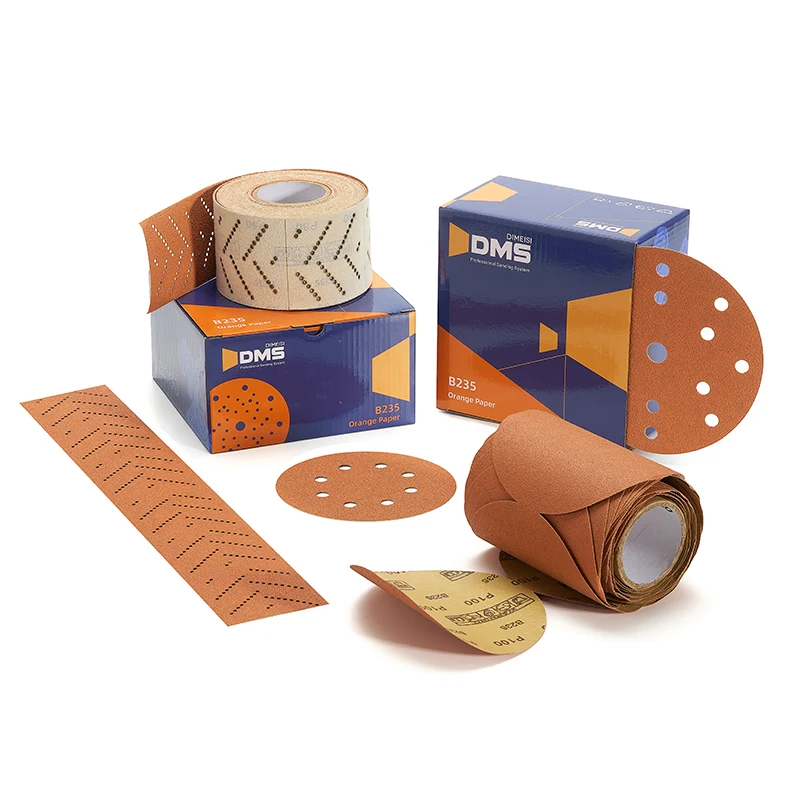
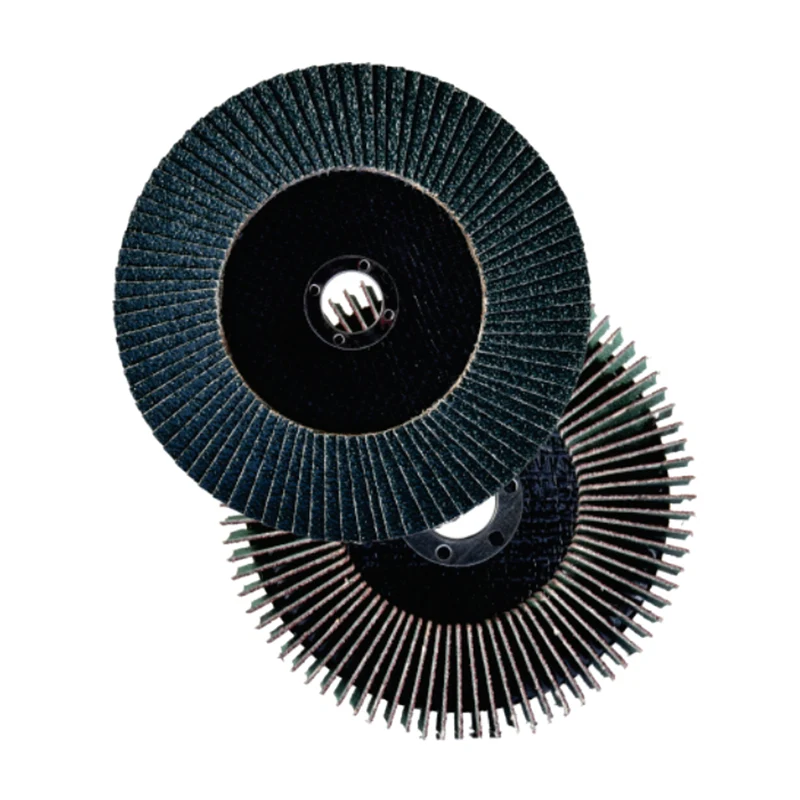
Low-grit sandpaper of different grits must be matched with the appropriate equipment to achieve good efficiency. P24–P36 is the coarsest grit, suitable for quickly removing thick oxide scale, rough welds, and casting flash. It is generally used for rough grinding with belt sanders or angle grinders. P40–P60 is a general-purpose coarse grit for removing moderate weld scars, rust, and old paint, as well as for shaping metal surfaces. It is commonly used with discs, sanding belts, and louvered discs. P80–P120 serve as a transition after coarse grinding, smoothing out scratches and preparing the surface for subsequent medium- to fine-grit sanding. They can be used with angle grinder discs or hand-held sanding blocks. When using an angle grinder, it is recommended to choose ceramic abrasive discs with a center hole or a fleece backing for lower grits. When using a belt sander, pay attention to the flatness of the seams when selecting wide or narrow sanding belts to prevent skipping during high-speed operation. DMS offers three formats—discs, sanding belts, and louvered discs—in the P40–P60 general-purpose coarse grinding range, making it convenient for workshops to purchase matching products for different workstations within the same abrasive system.
IV. Practical Selection Recommendations
If you are processing steel or stainless steel welds in your workshop, start with ceramic abrasive P40–P60 louvered discs or round discs. These products offer fast cutting performance and clog resistance, reducing the frequency of disc changes. DMS offers corresponding specifications for ceramic abrasive sandpaper used in metal grinding. Featuring a cloth backing and an anti-clogging coating, these products are suitable for use with angle grinders and belt sanders. When purchasing, we recommend first obtaining a small number of samples to conduct comparative testing on a single batch of workpieces to assess sheet life and cutting efficiency before deciding on the model for bulk purchase.
DMS Summary
When selecting low-grit sandpaper for metal grinding, prioritize ceramic aluminum oxide or zirconia corundum abrasives combined with a cloth or film backing, and choose specifications in the P40–P80 range based on your equipment. By conducting comparative tests with a small number of samples, you can more accurately identify products suited to your workshop's operating conditions, balancing both efficiency and durability.
Related News
- Getting Wave Marks? Issues to Check When Using Pneumatic Sandpaper
- What Are the Benefits of Eco-Friendly Ceramic Sandpaper for Low-Dust Sanding?
- What Leads to Peeling of the Waterproof Coating on Wet Sandpaper? Key Usage Tips
- Ceramic Sandpaper vs Silicon Carbide Sandpaper: How to Pick for Your Grinding Job
- Why Anti Static Fine Sandpaper Matters in Electronics Manufacturing
- Is Porous Dust-Collecting Automotive Sandpaper Worth the Switch?
Leave me a message