How to Tell When Your Water-resistant Sandpaper Has Failed in Wet Sanding?
Many technicians who do wet sanding have had this experience: the sandpaper still looks usable, but it no longer feels right. No matter how much you sand, the paint surface barely changes. Throwing it away seems wasteful, but continuing to use it raises concerns about potential problems. Determining whether a sheet of water-resistant sandpaper has lost its effectiveness isn't a matter of estimating how long it's been used, but rather of recognizing several signs that gradually appear during use.
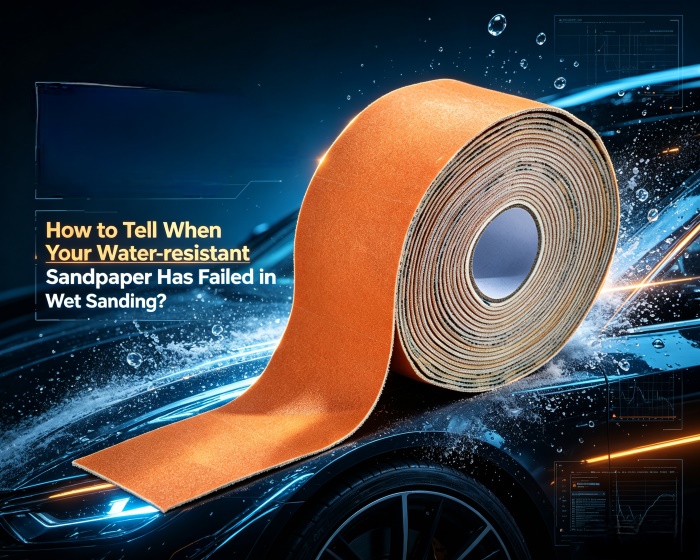
The first common sign is a noticeable decrease in cutting power.
A fresh piece of water-resistant sandpaper feels consistent during wet sanding, with moderate resistance as you move it across the surface, and the sanding debris is carried away by the water flow. When the sandpaper begins to lose its effectiveness, you'll feel it slipping across the paint surface, and the resistance when pushing it will decrease significantly — yet the orange peel or imperfections on the paint surface won't be removed at the same rate. This is because the abrasive grains have become dull or have fallen off, so the sandpaper is essentially rubbing against the workpiece with its backing, rather than cutting with the abrasive grains. Continuing to use it will only increase the risk of overheating the paint surface — something you need to pay special attention to when sanding clear coat.
The second sign is localized clogging or a glossy sheen on the sandpaper surface.
Even when rinsed with water, a worn-out water-resistant sandpaper will still have a mixture of paint dust and debris clinging to its surface that is difficult to wash away. When touched by hand, the surface will feel smooth rather than gritty. Under light, certain areas may even exhibit a glossy, glazed texture. This indicates that the sandpaper's debris-holding capacity has been exhausted, the anti-clogging coating has been depleted, and the abrasives are trapped within the clog, preventing them from contacting the workpiece. If you notice a large amount of white or transparent adhesive residue remaining on the sanding surface after rinsing, it's time to replace the sandpaper.
The third sign is deformation of the backing or delamination of the sandpaper.
After prolonged soaking and repeated folding, the paper or film backing of water-resistant sandpaper may develop curled edges, become soft overall, or show separation between the abrasive surface and the backing. This is particularly common when manually wet-sanding the body's creases, as the sandpaper often needs to be folded. If there is noticeable abrasive loss or exposed backing fibers at the fold lines, it indicates that the waterproof bonding layer has failed. Continuing to use the sandpaper not only compromises the sanding results but also risks scratching the surrounding paint surface with the loose abrasive particles.
The fourth sign is inconsistent sanding marks.
Within its normal service life, the depth and density of scratches produced by a single sheet of sandpaper should be relatively uniform. As the sandpaper begins to fail, you may notice scratches of varying depths in the sanded area, or find that some areas are over-sanded while others remain under-sanded. This is typically due to an uneven distribution of abrasive grains, where the abrasive in some areas has long since fallen off, while the remaining areas are still barely functioning. These inconsistent scratches will increase the difficulty of subsequent polishing operations and may even require rework.
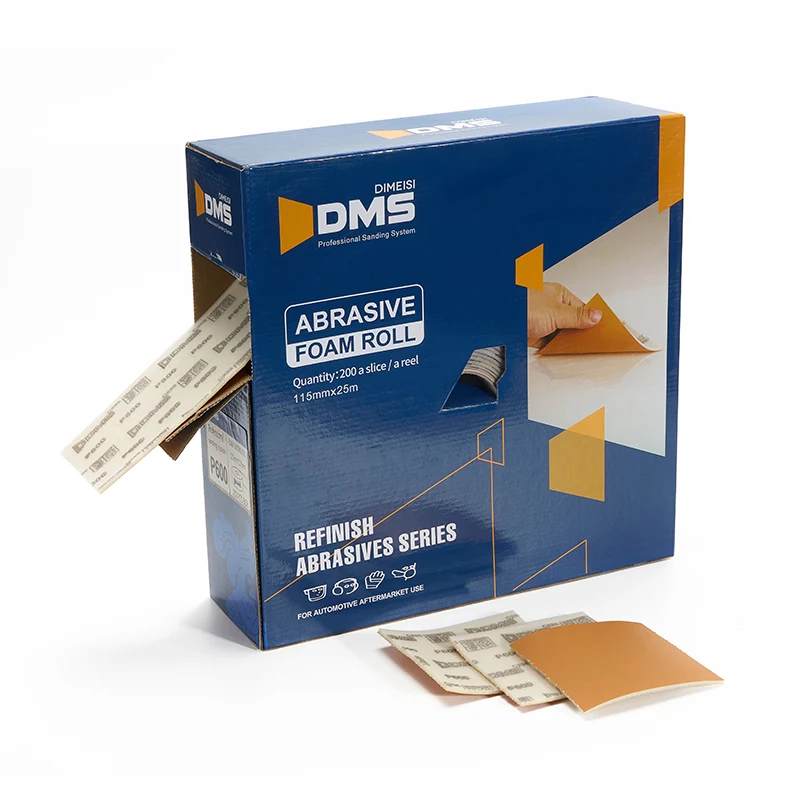
Overall, the failure of water-resistant sandpaper during wet sanding is a gradual process, with signs including a decrease in cutting force, clogging and glazing of the sanding surface, deformation and delamination of the backing, and reduced consistency of the sanding marks. In practice, once any two of these signs appear simultaneously, it usually indicates that the sandpaper has reached the end of its effective service life. In the research and development of this product range, DMS has continuously optimized the durability of the waterproof bonding layer and the anti-clogging properties of the abrasive grains. This ensures a longer effective sanding window under reasonable usage conditions, helping body and paint shops reduce labor time losses caused by frequent sandpaper changes.
Related News
- How to Quickly Check the Bond Strength and Resilience of a Sanding Sponge for Cars?
- Ultra-Fine Sandpaper in Auto Refinishing: Tips for Edge Safety and Consistent Finish
- Beyond Samples: How to Confirm Production Consistency from Your Pneumatic Sandpaper Supplier
- Automotive Sandpaper Manufacturer Recommendation | Dry & Wet Sanding, Round & Square Sheets, Direct Source Factory
- A Must-Read Checklist for Purchasing Professionals: How to Avoid Sandpaper Manufacturers with Unstable Sandpaper Production?
- Sandpaper Procurement: Which Sandpaper Factory Is Reliable for Purchasing Sandpaper Supplies for Auto Repair and Carpentry?
Leave me a message