Paint Finishing with High-Grit Sandpaper: Selection Criteria and Progression Tips
Fine sanding of sheet metal paint surfaces is a transitional step in the painting process that bridges spray coating and polishing. Its primary objective is to eliminate surface defects such as orange peel and dust spots without damaging the clear coat, thereby establishing a uniform microscopic surface condition for subsequent polishing. In this process, the selection of high-grit sandpaper directly affects the efficiency of fine sanding and the final gloss level. So, what are some tips for selecting the right sandpaper?

Grit Selection Must Match the Type of Defect
The selection of sandpaper grit essentially depends on the severity of the paint surface defects. For minor dust spots and fine sagging marks on the clear coat surface, or for surface pretreatment prior to mirror polishing, 2,000 to 3,000 grit is the most commonly used range for high-grit sandpaper. The amount of material removed within this range is limited, leaving only shallow scratches that can be easily eliminated later with a polishing wax that provides fine abrasion—without penetrating the clear coat.
If the paint surface has moderate orange peel, or if the old paint surface needs to be roughened to improve adhesion, 1,500 to 2,000 grit offers a relatively balanced compromise between finishing efficiency and surface smoothness. When dealing with severe orange peel, noticeable granular protrusions, or the need to initially level out deep sanding marks, 1,000 to 1,500 grit can serve as the starting grit. The sanding marks left at this stage are deeper and must be gradually transitioned through higher-grit sandpaper and thoroughly polished to eliminate them.
Gradual Transition and Wet Sanding Principles
Regardless of the starting grit range chosen, a step-by-step progression is a process worth following in fine sanding operations. For example, starting from 1,000-grit and proceeding sequentially through 1,500-grit, 2,000-grit, and then 3,000-grit, each step should thoroughly remove the scratches left by the previous step to ensure a stable, uniform mirror-like finish during the polishing stage. In this process, the final result depends largely on the refinement level of the high-grit sandpaper; excessive gaps between grits or skipping steps may prevent the finer grits from covering coarse scratches, thereby increasing polishing time.
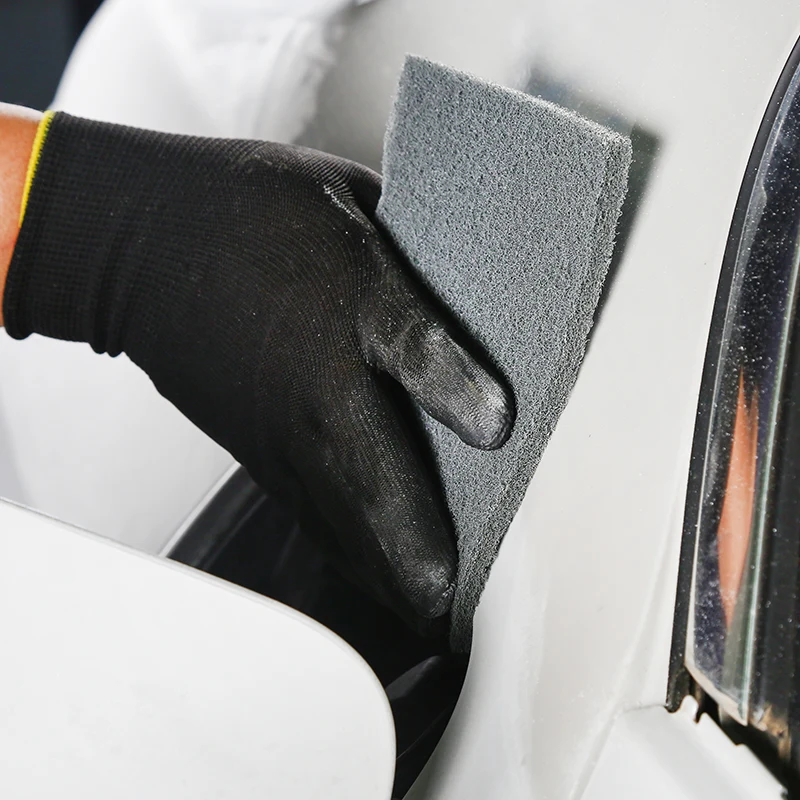
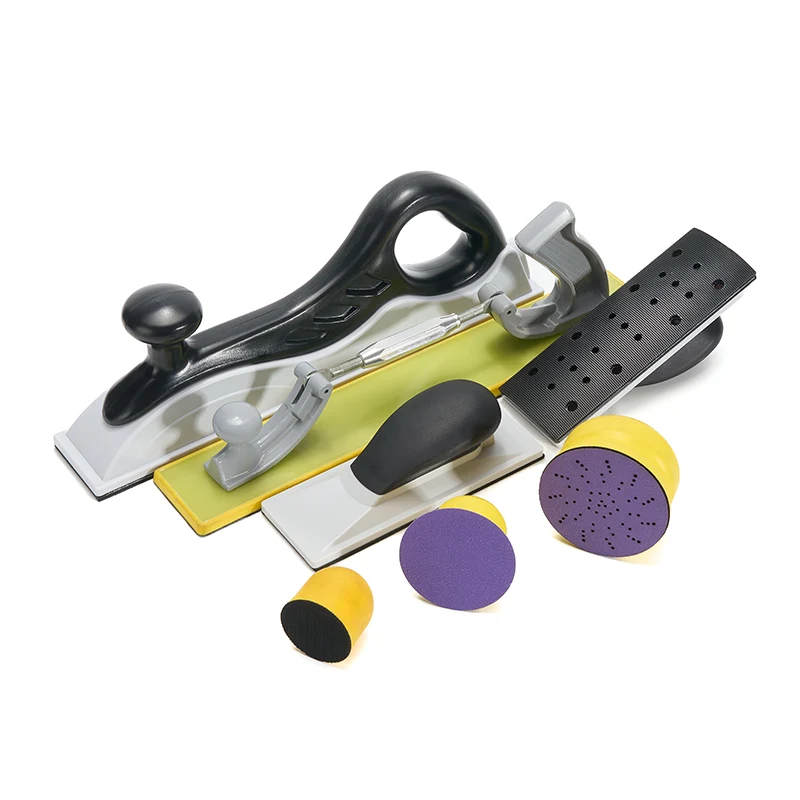
It is ideal to use water while fine-sanding. Clean water acts as a lubricant and coolant, reducing the likelihood of sandpaper clogging and preventing localized overheating during dry sanding—which can cause the paint finish to lose its luster or become scorched—while also minimizing dust buildup. When sanding, it is recommended to use a flexible sanding pad or sponge block to distribute pressure evenly. Sand in straight lines or crisscross patterns along the same direction to minimize random swirl marks caused by erratic circular motions. The paint film is thinner along panel edges and at bend lines; therefore, work should be performed gently. Wipe the area dry and inspect it after every ten or so passes; stop once defects are confirmed to be eliminated to prevent over-sanding that could penetrate the topcoat. When using high-grit sandpaper on these vulnerable areas, it is especially important to control both pressure and the number of passes.
Reference for Treating Different Paint Surface Conditions
For newly painted surfaces with only slight orange peel or scattered dust spots, start with 2,000-grit sandpaper combined with wet sanding. When higher gloss is required, after wet sanding with 3,000-grit, further refine the surface using 5,000- to 7,000-grit ultra-fine sandpaper or polishing cotton. At this stage, the role of high-grit sandpaper shifts from defect correction to serving as a finishing tool for gloss preparation. When refinishing old paintwork, where the paint film thickness and condition are unknown, it is advisable to begin with a test sanding at 2,500-grit before deciding whether to reduce the grit size to avoid the risk of penetrating the substrate.
A common fine-sanding sequence in professional body and paint shops is as follows: use 1,500-grit to address orange peel and dust spots; progressively refine the surface with 2,000- to 3,000-grit wet sanding; and then finish with a three-stage polishing process using coarse, medium, and mirror-finish waxes. This process generally restores the finished paint surface to its original factory gloss level.
DMS Summary
There is no one-size-fits-all answer for selecting high-grit sandpaper, the decision must be based on a comprehensive assessment of the paint surface’s actual condition, the technician’s technique, and the desired level of gloss. With appropriate grit selection, proper step-by-step progression, and consistent, controlled technique, the fine-sanding process can lay a solid foundation for the paint surface’s final optical appearance while protecting the clear coat.
Related News
- What Leads to Peeling of the Waterproof Coating on Wet Sandpaper? Key Usage Tips
- Ceramic Sandpaper vs Silicon Carbide Sandpaper: How to Pick for Your Grinding Job
- Why Anti Static Fine Sandpaper Matters in Electronics Manufacturing
- Is Porous Dust-Collecting Automotive Sandpaper Worth the Switch?
- Wrong Collision Repair Sandpaper Costs You Time. Here's How to Choose Right
- Why Sanding Pad Inspection Matters When Replacing Finishing Sandpaper
Leave me a message