Assessing a Sandpaper Factory: Stable Supply and Modification of Aluminum Oxide Sandpaper Automotive
Aluminum oxide is a widely used base abrasive in aluminum oxide sandpaper automotive, but products with the same grit designation can vary significantly between factories in terms of cutting efficiency, wear resistance, and batch consistency. This variation often does not originate in the coating process but is embedded earlier in the abrasive supply and modification stages. Therefore, evaluating the true capability of a sandpaper factory should not stop at the appearance of the finished product; it should trace upstream, starting from several key stages.
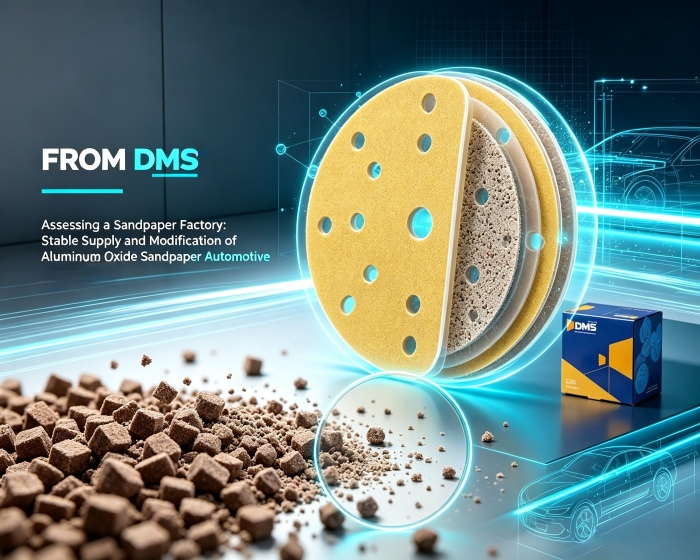
First, check whether incoming abrasive records are complete. Factories with stable supply capabilities usually maintain long-term cooperation with upstream abrasive suppliers and perform incoming inspection on every batch of abrasive. When evaluating a supplier of aluminum oxide sandpaper automotive, buyers can request to review recent incoming inspection data, including particle size distribution, chemical composition, and batch sources. If records are complete and traceable, it indicates the factory has control awareness over upstream fluctuations. Conversely, if no incoming records can be provided, or if the source of abrasives is vague, batch-to-batch differences are difficult to avoid.
Second, walk into the workshop to see whether modification equipment is actually operating. The performance of aluminum oxide sandpaper automotive depends not only on the abrasive itself but also closely on subsequent heat treatment, crushing and shaping, or surface treatment. Factories with modification capabilities are equipped with corresponding equipment and can explain the treatment logic for different sanding scenarios. For example, sanding body filler requires both cutting and chip removal, so specific surface treatment is used to reduce abrasive dust adhesion. If such processes are not visible in the workshop, or if the modification approach cannot be clearly explained, then the so-called technical capability lacks support.
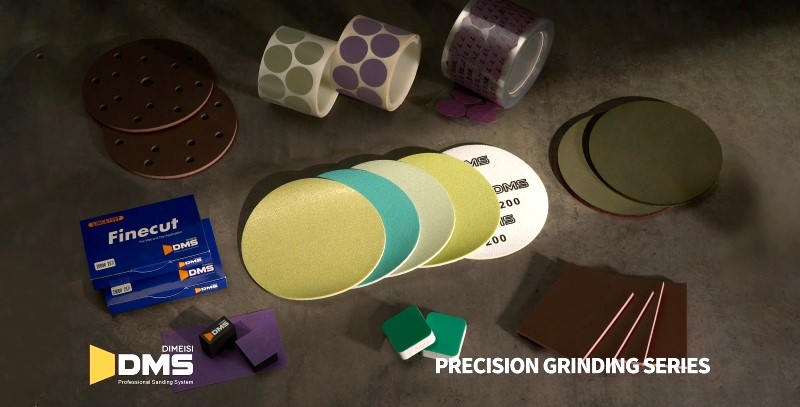
Third, verify whether testing data forms a closed loop. Stable modification capability should be quantifiable, which is particularly important for aluminum oxide sandpaper automotive. Capable factories link incoming abrasive inspection with finished sandpaper performance testing, maintaining data on upstream abrasive particle size and bulk density as well as downstream cutting force, wear resistance, and anti-clogging performance. Buyers can request corresponding records from several consecutive batches to observe the range of variation. Complete data with minimal fluctuations indicates an effective quality control loop. If only finished product certificates are available without upstream abrasive data, stability is difficult to confirm.
Finally, make the final judgment through parallel sample testing. Ask the factory to provide samples of aluminum oxide sandpaper automotive produced with different batches of abrasive, and conduct comparative sanding on the same workstation and the same workpiece. Focus on observing initial cutting speed, effective sanding duration, sanding surface clogging, and whether scratch marks are uniform. If the performance of each batch is similar, it indicates that supply and modification capabilities are indeed stable. If a certain batch shows noticeable deviation, further inquiry is needed to determine whether it was caused by changes in abrasive source or fluctuations in processing parameters.
DMS Summary
In summary, judging whether a sandpaper factory has stable supply and modification capabilities for aluminum oxide abrasive comes down to traceability. From incoming abrasive records, workshop modification equipment, and closed-loop testing data to parallel sample testing, each step verifies whether the factory truly controls the entire process from abrasive to finished product. Factories that can do this are more likely to consistently deliver aluminum oxide sandpaper products with uniform quality over long-term cooperation.
Related News
- Getting Wave Marks? Issues to Check When Using Pneumatic Sandpaper
- What Are the Benefits of Eco-Friendly Ceramic Sandpaper for Low-Dust Sanding?
- What Leads to Peeling of the Waterproof Coating on Wet Sandpaper? Key Usage Tips
- Ceramic Sandpaper vs Silicon Carbide Sandpaper: How to Pick for Your Grinding Job
- Why Anti Static Fine Sandpaper Matters in Electronics Manufacturing
- Is Porous Dust-Collecting Automotive Sandpaper Worth the Switch?
Leave me a message