Why Ceramic Abrasive Wet-Sanding Sandpaper Excels on Soft Varnish
In automotive paint refinishing, sanding soft clear coats often places higher demands on sandpaper than sanding intermediate coats or body filler. The clear coat layer is thin and relatively soft, with a narrow tolerance window for temperature and pressure; any loss of control during the process can lead to sanding through the coat or whiteout, resulting in rework. In this context, wet-sanding sandpaper with ceramic abrasives is gradually being adopted as standard equipment in more paint shops.
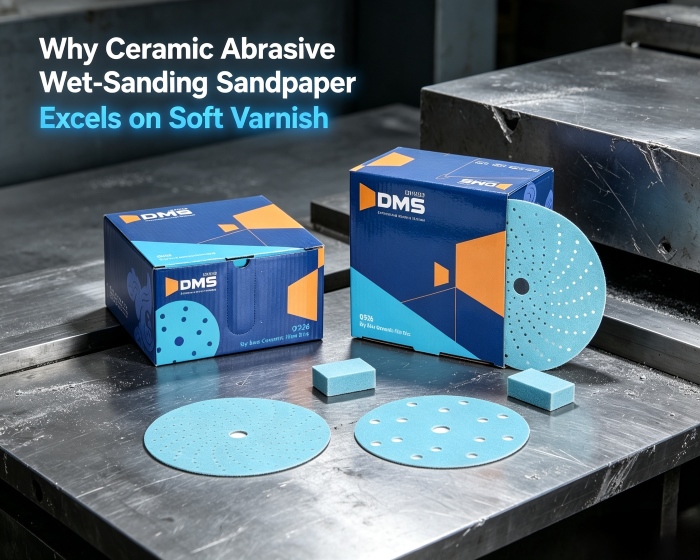
Why has this type of sandpaper been incorporated into the standard equipment of body and paint shops?
The reason lies not in the outstanding performance of any single metric, but in the relatively well-matched technical combination formed by its abrasive structure, cutting mechanism, and the wet-sanding process. The key factor determining whether this combination can perform consistently is the wet-sanding sandpaper itself.
What are the advantages?
The key difference between ceramic abrasives and ordinary aluminum oxide abrasives lies in their self-sharpening mechanism. Ordinary aluminum oxide grains gradually become dull during the sanding process, causing cutting efficiency to steadily decline. Operators often subconsciously increase downward pressure to compensate, but soft clear coats are particularly sensitive to localized pressure changes. The microcrystalline structure of ceramic abrasives causes the dulled layer to flake off through microscopic fracturing during operation, continuously exposing new cutting edges. This means that under the same sanding pressure, a quality sheet of wet-sanding sandpaper can maintain consistent cutting performance for a longer period, reducing the risk to the paint finish caused by excessive manual pressure.
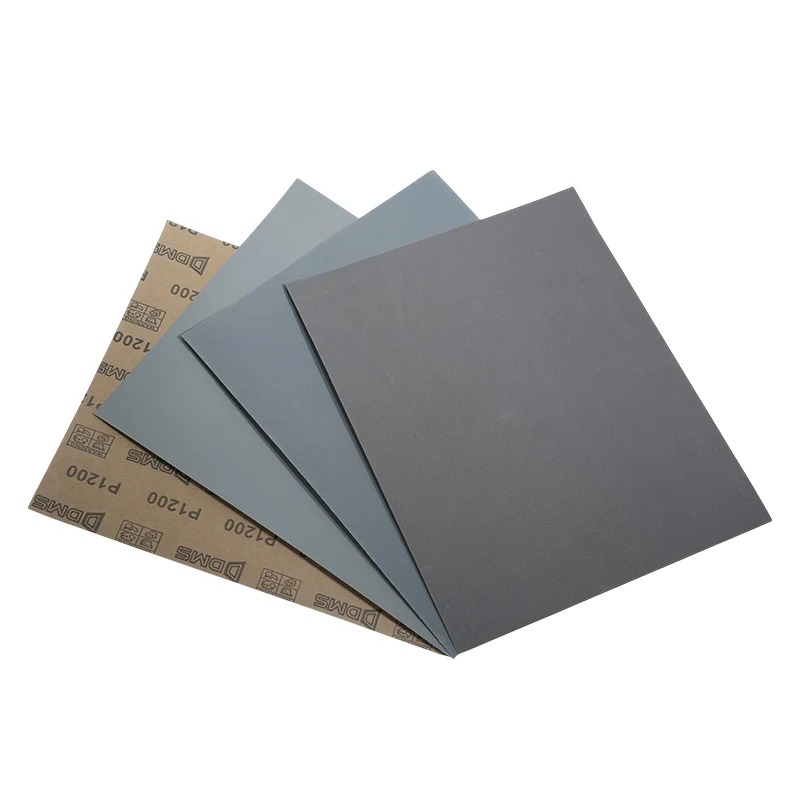
The introduction of wet-sanding conditions further amplifies this difference. The cooling effect of water flow reduces heat buildup in the sanding area, which is obviously beneficial for protecting soft clear coats. At the same time, wet-sanding sandpaper with ceramic abrasives for automotive paint typically features an anti-clogging coating that prevents grinding debris from embedding in the abrasive surface; most debris is washed away by the water flow, maintaining the abrasive's cutting effectiveness. In contrast, if the water-resistant bonding layer of ordinary sandpaper is not stable enough during wet sanding, the backing paper may absorb water and soften, or the abrasive surface may become clogged, causing the sanding feel to change significantly over time. Therefore, selecting a wet-sanding sandpaper with proper backing treatment and coating technology directly impacts the final finish of soft clear coats.
In terms of scratch control, ceramic abrasives — due to their self-sharpening and self-renewing properties — produce scratches of relatively uniform depth throughout their effective lifespan. If scratches vary in depth after sanding a soft clear coat, the polishing process will require more time to correct them and may even leave a hazy residue that is difficult to conceal. The consistency of scratches is directly linked to the efficiency of subsequent processes, which is a key reason why many body shops tend to stick with a specific brand of wet sandpaper after long-term use.
From a cost-of-use perspective, the lifespan per sheet of ceramic abrasive automotive wet sandpaper typically exceeds that of standard aluminum oxide products. The labor savings resulting from reduced replacement frequency often offset the difference in unit price when calculated on a per-vehicle or per-workstation basis. In its automotive paint wet-sanding sandpaper product line, Dongsheng Sandpaper has integrated processes focused on the self-sharpening properties of ceramic abrasives, the stability of the water-resistant backing, and the consistency of the anti-clogging coating, ensuring predictable performance when sanding soft clear coats.
Overall, the advantages of ceramic abrasive wet sanding paper for automotive paint in soft clear coat sanding are reflected in four dimensions: low-pressure cutting ability, heat dissipation and chip removal efficiency during wet sanding, uniformity of scratches, and total cost of ownership.
DMS Summary:
This is not achieved by outperforming competitors in any single parameter, but rather by coordinating abrasive characteristics with process conditions to make the performance of a single wet-sanding sandpaper sheet more predictable throughout its entire service life. For body shops that deal with different vehicle models and paint surface conditions every day, this predictability is the foundation for reducing rework and controlling per-vehicle costs.
Related News
- What Leads to Peeling of the Waterproof Coating on Wet Sandpaper? Key Usage Tips
- Ceramic Sandpaper vs Silicon Carbide Sandpaper: How to Pick for Your Grinding Job
- Why Anti Static Fine Sandpaper Matters in Electronics Manufacturing
- Is Porous Dust-Collecting Automotive Sandpaper Worth the Switch?
- Wrong Collision Repair Sandpaper Costs You Time. Here's How to Choose Right
- Why Sanding Pad Inspection Matters When Replacing Finishing Sandpaper
Leave me a message