Stiff vs. Flexible: Choosing the Right Backing for Collision Repair Abrasives
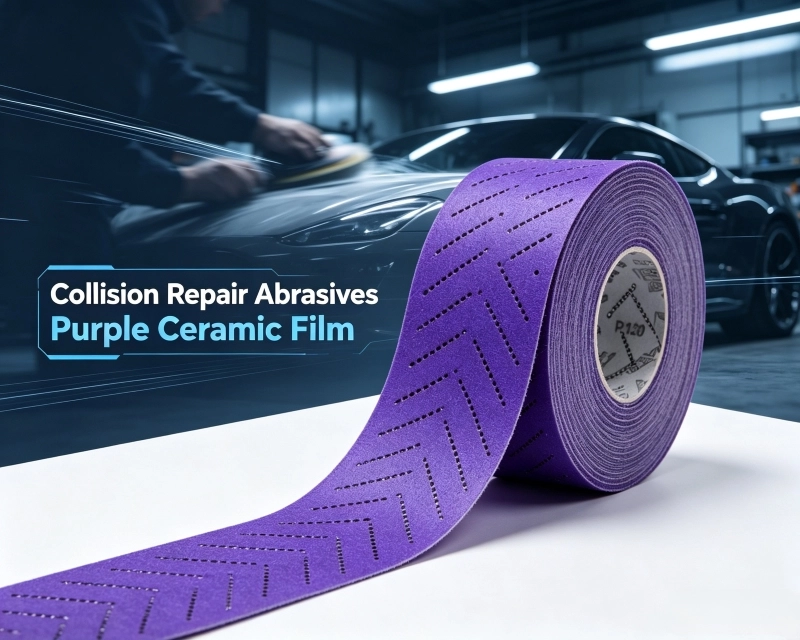
In automotive refinishing, attention usually goes to grit size and cutting speed. Yet the backing — the paper, cloth, or film layer that carries the abrasive grain — often decides whether a sanding job looks professional or leaves behind swirl marks and flat spots. For anyone sourcing collision repair abrasives, understanding backing flexibility is a practical way to judge product quality.
Why Does Backing Flexibility Matter?
Car bodies are rarely flat. Fenders, bumpers, and wheel arches all curve in more than one direction, and a rigid backing cannot follow these contours evenly. When the backing is too stiff, pressure concentrates at the center of the pad, leaving low spots at panel edges. When it flexes well, the collision repair abrasives conforms to the panel, and material removal stays uniform.
Flexibility also matters in motion. Most shops sand with a dual-action (DA) sander, and a supple backing helps the sanding disc track the pad smoothly, reducing heat build-up and lowering the risk of burn-through on clear coat.
What Properties Define a Well-Designed Backing?
Flexibility is a combination of several characteristics. Conformability allows the abrasive to drape over curved surfaces, which is what makes feather edging and spot blending possible. Tear and tensile strength ensure flexibility does not come at the cost of durability, since a backing that tears under edge pressure will fail quickly on door jambs and rocker panels. Dimensional stability keeps the backing from stretching or curling during wet sanding, while consistent thickness maintains a stable collision repair abrasives plane — a few microns of variation can show up as uneven gloss after clear coat.
How Do Backing Materials Compare?
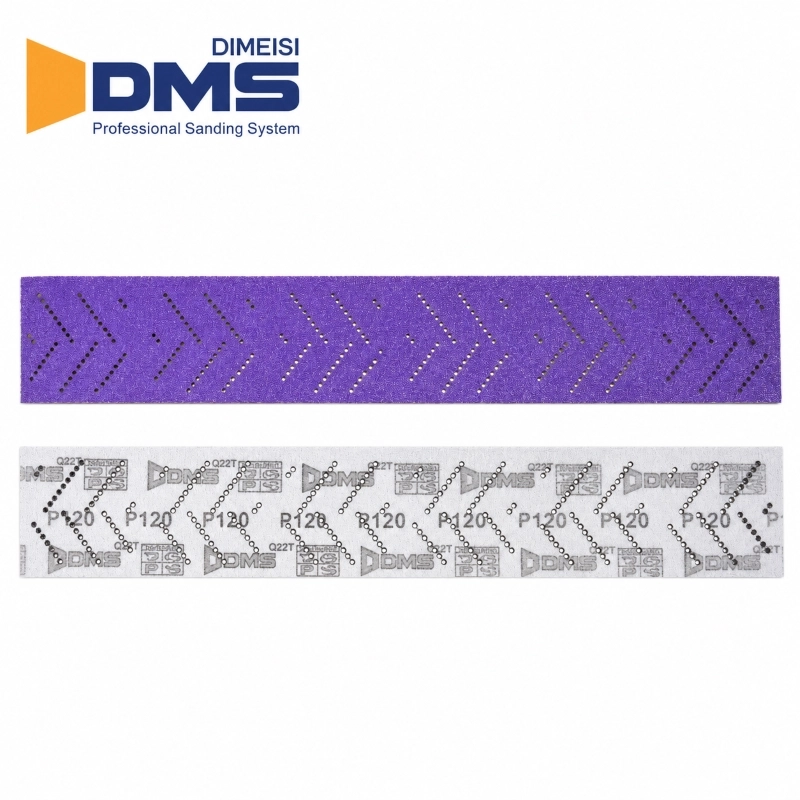
Paper backing remains the traditional choice. Heavier grades (such as C-weight and D-weight) balance flexibility and strength for shaping body filler and feather edging, while lighter grades suit hand sanding in tight areas.
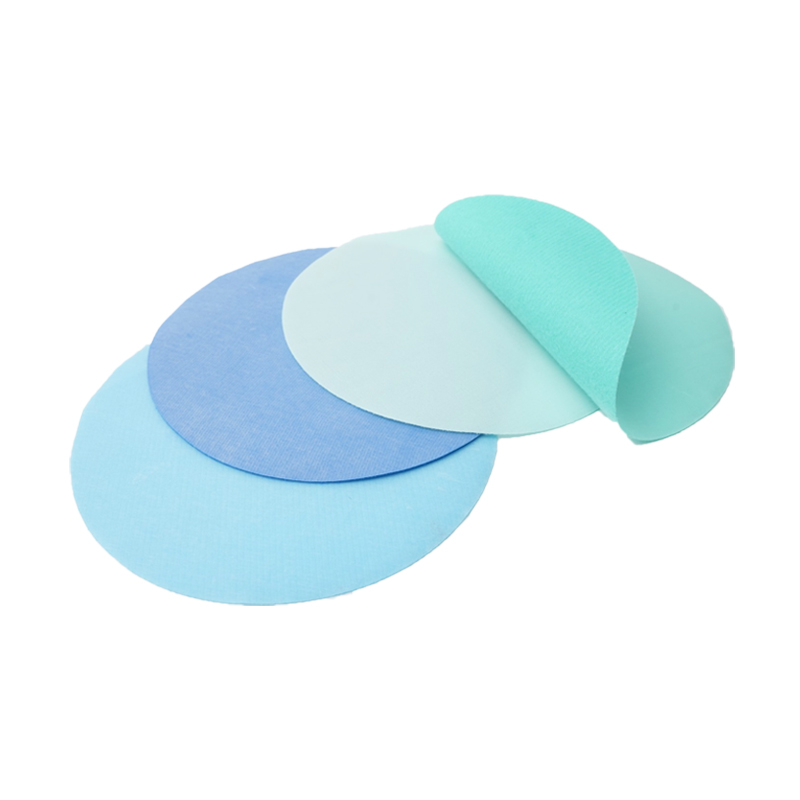
Film backing is increasingly common in refinishing. Polyester film is thinner and more uniform than paper, performs especially well on orbital sanding discs for clear coat work, and holds its flatness through wet sanding. Its trade-off is a higher price, which many shops accept where finish quality matters most.
Cloth and fiber backings offer higher tear resistance and suit heavy-duty work such as paint stripping, where durability matters more than flexibility.
How to Match Flexibility to Each Repair Stage?
Let the stage guide the choice. Heavy filler shaping calls for firmer backings that keep the plane stable. Feather edging and primer sanding work best with medium-flexibility paper, which balances conformability with control. For clear coat and final finishing, film-backed sanding discs deliver the most consistent contact and support an even gloss after polishing. Carrying two or three backing types usually covers a shop's workload better than relying on a single grade.
What Should Buyers Check Before Ordering?
Flexibility can be checked in simple ways. Bend a disc sample over a curved form and see whether the collision repair abrasives surface stays intact, then run a short DA sanding test on a curved panel and inspect the contact pattern under raking light. Ask about backing specifications, including paper weight, film thickness, and wet-strength treatment, since these predict performance more reliably than grit alone.
Manufacturers such as DMS-Abrasives offer backing options across paper, film, and cloth grades and can tailor flexibility to a specific refinishing process, which is helpful for shops working with water-based primers or high-gloss standards.
Conclusion
Backing flexibility is a quiet but decisive factor in how collision repair abrasives perform on real vehicle surfaces. Conformability, tear strength, dimensional stability, and consistent thickness determine whether an abrasive follows the panel or fights it. Matching backing types to repair stages helps shops achieve uniform results with less rework.
Related News
- A 2026 OEM Sourcing Guide: How to Choose Reliable Custom Ceramic Abrasive Manufacturers
- Why P-Grade Sandpaper Sets the Bar for Collision Repair?
- P1500 Finishing Abrasives: Why Consistency Varies by Manufacturer?
- How Do Blue Film Abrasive Discs Improve Sanding Efficiency?
- How to Evaluate a Waterproof Sandpaper Factory’s Quality Control for Long-Term Supply
- Will Ceramic Sandpaper Burn Your Paint? What to Know Before You Sand
Leave me a message
News Recommendations