P1500 Finishing Abrasives: Why Consistency Varies by Manufacturer?
Finishing abrasives labeled “P1500” may appear to have the same grit size, but when actually used on a painted surface or precision workpiece, the surface finishes produced by different manufacturers can vary significantly. Some leave uniform scratches that are easy to polish, while others leave marks of varying depths or even cause localized haze. The issue lies not in the “P1500” designation itself, but in the manufacturing details behind it.
Particle Size Distribution Is Not Determined by Nominal Grit Size Alone
P1500 represents a grit size range; not every abrasive grain is the same size. Different manufacturers have varying levels of precision in their crushing, screening, and grading processes, resulting in differences in the actual width of the particle size distribution. Products with a wider particle size distribution contain a mix of coarse and fine particles. Coarse particles leave deeper scratches, while fine particles fail to cut effectively, naturally affecting surface consistency. Products with a narrower particle size distribution allow for more uniform abrasive action, resulting in scratches of more consistent depth and making subsequent polishing easier.
Abrasive Shape and Sharpness Affect Scratch Morphology
Even for the same type of abrasive—such as aluminum oxide or silicon carbide—different particle shapes result in different cutting mechanisms. When flake-shaped or needle-shaped particles predominate, irregular scratches are more likely to form. In contrast, isometric particles with well-defined edges produce more uniform cutting marks. Some manufacturers of finishing abrasives shape or surface-treat their grains to control particle sharpness and brittleness, which also affects the surface condition after P1500 fine grinding. Even with the same nominal grit size, differences in abrasive shape and sharpness can lead to significant variations in feel and results.
Abrasive Embedding Density and Distribution Determine Cutting Uniformity
The embedding density and distribution uniformity of finishing abrasives directly affect the number of effective cutting points per unit area. If the abrasives are embedded too densely, there is insufficient space for chip removal, leading to clogging and overheating; if they are too sparse, localized cutting is insufficient, resulting in areas of the surface that are not properly ground. Manufacturers with well-controlled electrostatic grit-embedding processes achieve more uniform abrasive particle alignment; a single pass of P1500 over the painted surface results in more consistent scratch density and depth. When control precision is insufficient, cutting performance varies across different areas of the same sandpaper sheet.
Binders and Coatings Affect Abrasive Retention and Chip Removal
During the fine-grinding stage, the abrasive particles are fine and tend to adhere to the sandpaper surface. If the binder strength is insufficient, the abrasive grains will detach prematurely under pressure, leaving irregular scratches on the surface. If the anti-clogging coating is improperly formulated, grinding debris cannot be effectively cleared, causing localized blockages on the sandpaper surface and resulting in variations in cutting depth. Differences among manufacturers in resin formulations and coating processes are directly reflected in the actual surface finish achieved with P1500 sandpaper.
Backing Flatness and Batch Consistency Must Not Be Overlooked
Finishing abrasives are highly sensitive to backing flatness. Differences in thickness tolerances and surface flatness of paper or film backings result in varying pressure transfer. Batch consistency is equally critical; if there are fluctuations in particle size distribution, grit density, or coating thickness across different batches from the same manufacturer, the performance of P1500 will be inconsistent.
For practical evaluation, it is recommended to perform parallel grinding tests using P1500 finishing abrasives from different manufacturers on the same workpiece and with the same equipment, observing the uniformity of scratches, clogging, and polishing difficulty.
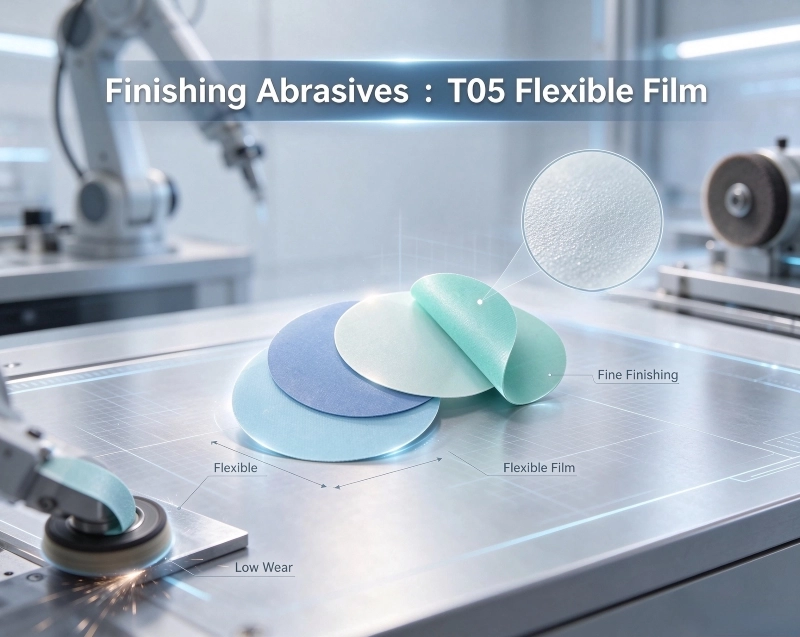
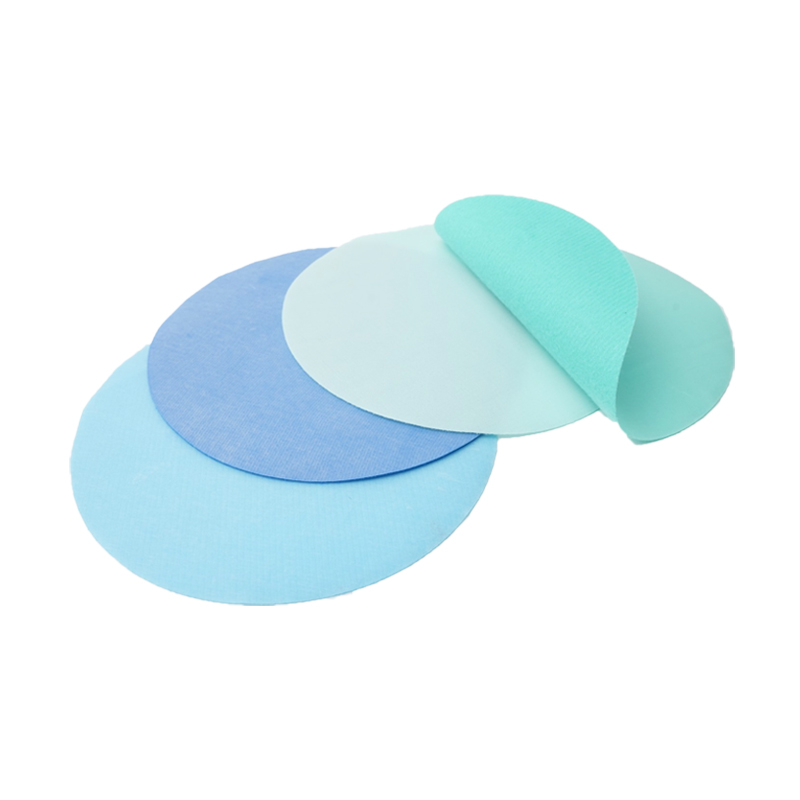
In this comparative test, products such as DMS-Abrasives’ T05 Flexible Film can serve as a reliable reference option for finishing abrasives. The T05 features a TPU flexible film backing combined with uniformly distributed aluminum oxide abrasives, covering grit sizes from P400 to P3000—including the critical P1500 range. It provides relatively consistent scratch control when handling curved surfaces and complex contours, helping to reduce the workload required for subsequent polishing. Any shortcomings in the surface finish can typically be identified through a single round of physical sample comparisons.
Next:
-
Related News
- How Do Blue Film Abrasive Discs Improve Sanding Efficiency?
- How to Evaluate a Waterproof Sandpaper Factory’s Quality Control for Long-Term Supply
- Will Ceramic Sandpaper Burn Your Paint? What to Know Before You Sand
- Wet Sanding Troubleshooting: Finishing Abrasives Backing Softening and Delamination
- How Do High-Temperature Resistant Automotive Sandpaper Rolls Benefit Auto Body Sanding?
- Getting Wave Marks? Issues to Check When Using Pneumatic Sandpaper
Leave me a message



News Recommendations