Pneumatic Sandpaper Procurement Recommendations for Auto Repair Shops: Avoid Three Cost Pitfalls
Auto repair shops commonly face several challenges during sanding operations, such as pneumatic sandpaper clogging due to dust buildup, blue marks appearing on painted surfaces, and excessive sandpaper wear before putty has been fully smoothed. Most of these issues are not caused by technician error, but rather by two easily overlooked procurement pitfalls. Only by avoiding these pitfalls can you procure the right pneumatic sandpaper.
Misconception 1: Relying Solely on Grit Size While Ignoring Differences in Abrasive Material
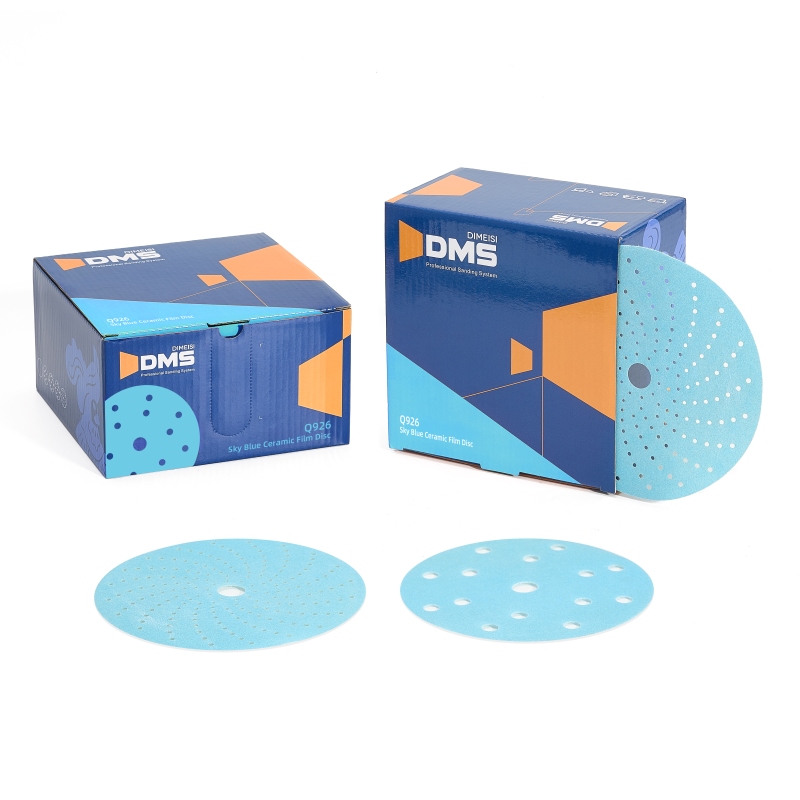
The grit size of pneumatic sandpaper only determines the depth of scratches left after sanding; actual cutting efficiency is determined by the abrasive material. Automotive sanding involves materials with significantly varying hardness—such as body filler, panel filler, primer, and clear coat. Conventional aluminum oxide sandpaper dulls quickly when sanding hard body filler and is prone to leaving streaks when sanding soft paint surfaces. Ceramic aluminum oxide abrasives are suitable for a wide range of material sanding scenarios. As the microcrystalline surface layer wears down, it naturally sheds, maintaining consistent sharpness throughout the process. Cutting force remains relatively stable, eliminating the need to apply excessive pressure and reducing the risk of high-temperature paint surface burns. DMS’s ceramic abrasive products, optimized for body filler sanding, leverage these material properties to balance sanding efficiency with paint surface protection.
Misconception 2: Assuming dust clogging is unavoidable and neglecting the anti-clogging technology of pneumatic sandpaper
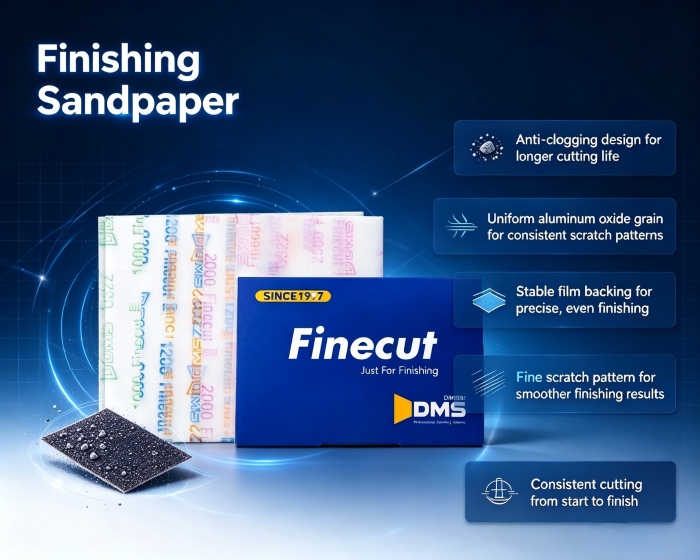
Putty dust clogging is a major factor that reduces workstation sanding efficiency. When faced with dust clogging on pneumatic sandpaper, many technicians simply tap it to clear the debris, and most replace the sandpaper before it has worn down by even half. There are solutions to dust clogging. High-quality pneumatic sandpaper features a dual anti-clogging design: a stearate coating on the surface reduces dust adhesion, while self-sharpening abrasives continuously renew the sanding contact surface. DMS dry-sanding paper incorporates this composite anti-clogging technology, preventing putty dust from getting trapped in the sandpaper’s grooves. A light shake is all it takes to clear the dust, reducing the frequency of sandpaper replacement and minimizing downtime at the workstation.
Misconception 3: Focus on the unit price, but also calculate the total cost of ownership
When purchasing, people often compare the price difference per sheet of pneumatic sandpaper but tend to overlook the total consumption of sanding materials per vehicle and the hidden costs resulting from workstation downtime. While sandpaper with self-sharpening abrasives and anti-clogging coatings may have a higher unit price, each sheet covers a larger sanding area, making it more cost-effective when calculating the total sanding material expenses per vehicle.
Purchasing Guide for Automotive Repair Shop-Specific Sandpaper
High-quality pneumatic sandpaper should possess three key characteristics—ceramic aluminum oxide abrasives to extend service life, a surface anti-clogging coating to mitigate dust buildup, and a flexible backing suitable for both manual and pneumatic sanders. DMS’s specialized pneumatic sandpaper covers the entire process, from 60-grit coarse grinding and shaping to 400-grit fine polishing of the paint surface. The product is designed to reduce the frequency of sandpaper changes, increase the number of vehicles processed per workstation, and optimize the overall profitability of the shop’s sanding operations.
Related News
- Getting Wave Marks? Issues to Check When Using Pneumatic Sandpaper
- What Are the Benefits of Eco-Friendly Ceramic Sandpaper for Low-Dust Sanding?
- What Leads to Peeling of the Waterproof Coating on Wet Sandpaper? Key Usage Tips
- Ceramic Sandpaper vs Silicon Carbide Sandpaper: How to Pick for Your Grinding Job
- Why Anti Static Fine Sandpaper Matters in Electronics Manufacturing
- Is Porous Dust-Collecting Automotive Sandpaper Worth the Switch?
Leave me a message