Beyond Samples: How to Confirm Production Consistency from Your Pneumatic Sandpaper Supplier
A well-made sample only proves that a pneumatic sandpaper manufacturer is capable of producing high-quality products, but it does not prove that it can consistently produce them. For a body and paint shop, what truly sets manufacturers apart is never the performance of the first sheet of sandpaper, but whether the 100th and 1,000th sheets remain as consistent as the sample. To verify the consistency of a batch for bulk supply, you cannot rely on intuition; you need several practical verification steps.
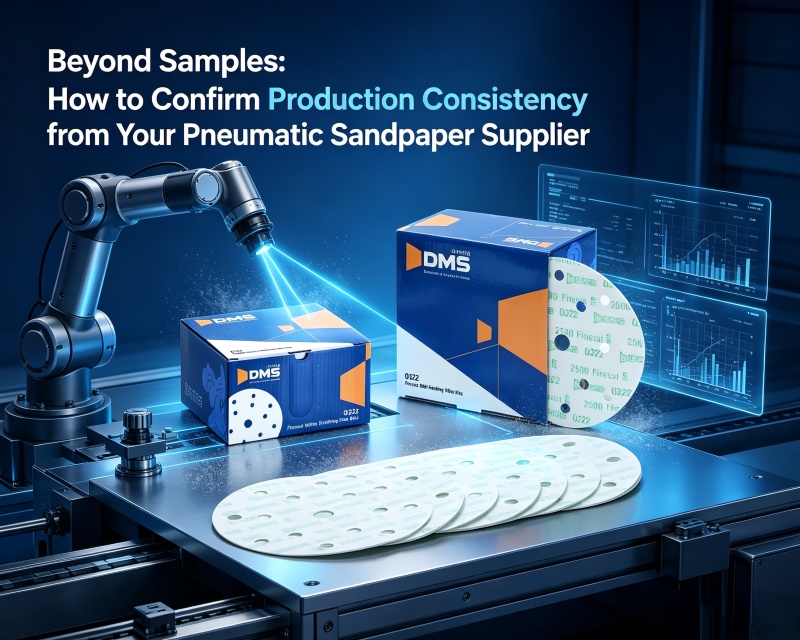
First, request factory inspection data for three consecutive batches directly from the pneumatic sandpaper manufacturer, rather than relying solely on a general certificate of conformity. The fluctuation range of key indicators—such as abrasive distribution density, coating thickness, bonding strength, and cutting dimension tolerances—across three consecutive batches is more persuasive than the absolute values of a single batch. Minimal fluctuation indicates effective process control. If the manufacturer cannot provide the data or if the data fluctuates wildly, this should raise a red flag.
Once you have the data, you’ll need to conduct a real-world cross-comparison in the workshop. Simply testing the product a few times during routine incoming inspection is far from sufficient. Select the same workstation and the same vehicle model, then use pneumatic sandpaper of the same grit size to continuously sand body filler until it fails, recording the cutting duration for each sheet. Select three sheets from one batch and three from another, then compare their wear curves. If the curves are similar and the difference in failure times is minimal, this indicates a stable process window; if one batch shows significantly earlier failure, it is most likely due to material contamination or issues with the curing process. At the final inspection stage, DMS uses similar multi-batch cross-comparison tests to define process boundaries, ensuring the product’s performance is repeatable at actual workstations.
Additionally, check whether the pneumatic sandpaper factory has a practice of retaining samples for traceability. A confident factory will seal samples by batch, labeling them with raw material lot numbers, production dates, and machine serial numbers, so that any deviations can be quickly traced back to the source of the problem. During a factory audit, take a moment to stop by the sample cabinet and review the records—this is more effective than any verbal explanation.
Finally, do not skip the small-batch trial order step. Once the pneumatic sandpaper sample passes inspection, place a small trial order first, requiring that the test report for that batch be included with the shipment and that the product be re-inspected upon arrival at your facility using the same standards. Observe whether the abrasive texture, clog resistance, and backing strength of the trial batch match those of the sample, while also verifying that packaging protection and delivery timelines comply with standards. The cost of a trial order is low, but it effectively mitigates mass-production risks.
In summary, samples demonstrate a supplier’s upper limit of capability, while batch consistency determines the baseline for cooperation. Data, cross-testing, sample retention for traceability, and a small-batch trial order—these four interconnected steps are sufficient to help you transform the selection of an air-powered sandpaper supplier from a judgment based on experience to one backed by facts.
Related News
- How to Tell When Your Water-resistant Sandpaper Has Failed in Wet Sanding?
- How to Quickly Check the Bond Strength and Resilience of a Sanding Sponge for Cars?
- Ultra-Fine Sandpaper in Auto Refinishing: Tips for Edge Safety and Consistent Finish
- Automotive Sandpaper Manufacturer Recommendation | Dry & Wet Sanding, Round & Square Sheets, Direct Source Factory
- A Must-Read Checklist for Purchasing Professionals: How to Avoid Sandpaper Manufacturers with Unstable Sandpaper Production?
- Sandpaper Procurement: Which Sandpaper Factory Is Reliable for Purchasing Sandpaper Supplies for Auto Repair and Carpentry?
Leave me a message