Why Does Machine Sandpaper Overheat? Causes and Practical Solutions
When a workpiece becomes hot during machine grinding, many people's first reaction is that the spindle speed is too high or the sandpaper grit is incorrect. However, a closer look in the workshop reveals that the root cause of the heat is often not the machine settings, but rather the cutting condition of the machine sandpaper. Once the abrasive grains shift from cutting to friction, nearly all mechanical energy is converted into heat, causing the workpiece temperature to rise rapidly. To resolve this issue, it is necessary to systematically investigate the three key factors: cutting, chip removal, and pressure.
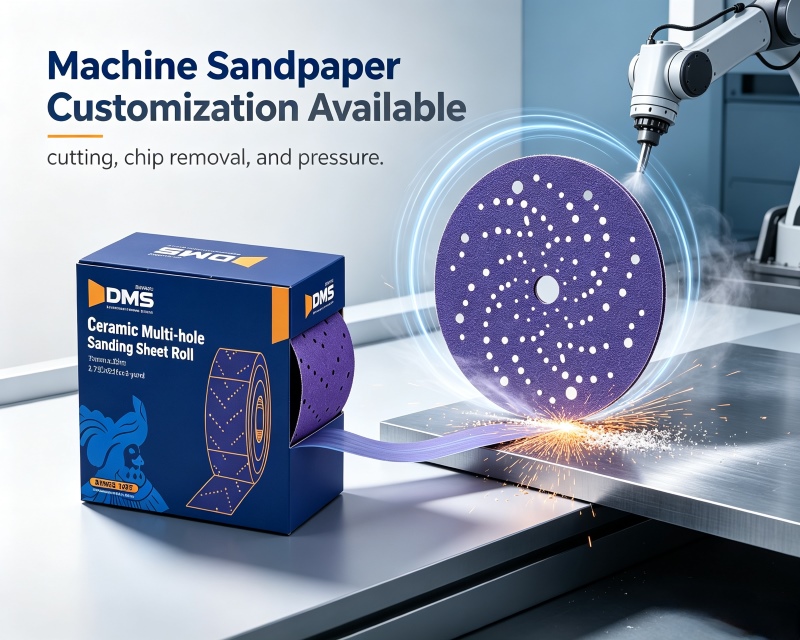
First, check whether the machine sandpaper has become ineffective. When functioning properly, the abrasive grains are sharp and cut off chips rather than grinding the material into powder. When the grains become dull or the surface is clogged with debris, the sandpaper will slide across the workpiece's surface; the feel will change from rough to smooth, the sound will shift from crisp to dull, and a shiny, glazed layer may become visible on the sandpaper's surface. If grinding continues at this point, heat will accumulate in the contact area, causing the wood to scorch and potentially resulting in blue spots on metal. The timing for replacing the sandpaper should not be based on time estimates, but rather on these three indicators: sound, feel, and the appearance of the sandpaper surface. Replacing the machine sandpaper with a new, quality sheet in advance costs far less than reworking a scorched workpiece.
Pressure control is the second area where problems commonly arise. Many people assume that slow grinding is due to insufficient force, so they press down harder. However, the greater the pressure, the larger the contact area, the more severe the overload on the abrasive grains, and the more the space for chip removal is compressed. The result is that the sandpaper clogs faster, the motor load increases, and the workpiece heats up more rapidly. The correct approach is to let the machine do the work, using your hands only to guide the direction, applying just enough pressure to maintain contact between the sandpaper and the workpiece. When sanding large areas, maintain a steady, even speed and keep the contact point constantly shifting so that heat has time to dissipate into the surrounding area.
Chip removal and heat dissipation are the third key aspects. Dust accumulation is a hidden contributor to heat buildup; grinding debris trapped in the gaps between the sandpaper not only blocks the chip removal path but also acts as an insulating layer, trapping heat in the contact area. Keeping the dust collection system unobstructed and regularly cleaning the sanding surface and machine vents can significantly improve heat dissipation. In wet grinding applications, water serves not only as a lubricant but, more importantly, continuously carries away the heat generated during grinding. When water flow is insufficient, the water film cannot cover the entire contact surface, causing localized dry grinding areas to heat up rapidly. Maintaining a sufficient water flow to flush away both grinding debris and heat is a fundamental requirement for controlling temperature during wet grinding.
The compatibility between the equipment and the sandpaper also affects heat generation. Using machine sandpaper with too fine a grit for rough grinding results in insufficient space for debris, causing it to fill up quickly and switch to a friction-based grinding state. Select the appropriate grit size based on the processing stage: use coarser grit for rough grinding to remove material quickly, then switch to finer grit for fine grinding. If the equipment supports variable speed control, appropriately reducing the rotational speed when working on thin workpieces, heat-sensitive materials, or during fine finishing can minimize the frictional heat generated per unit of time.
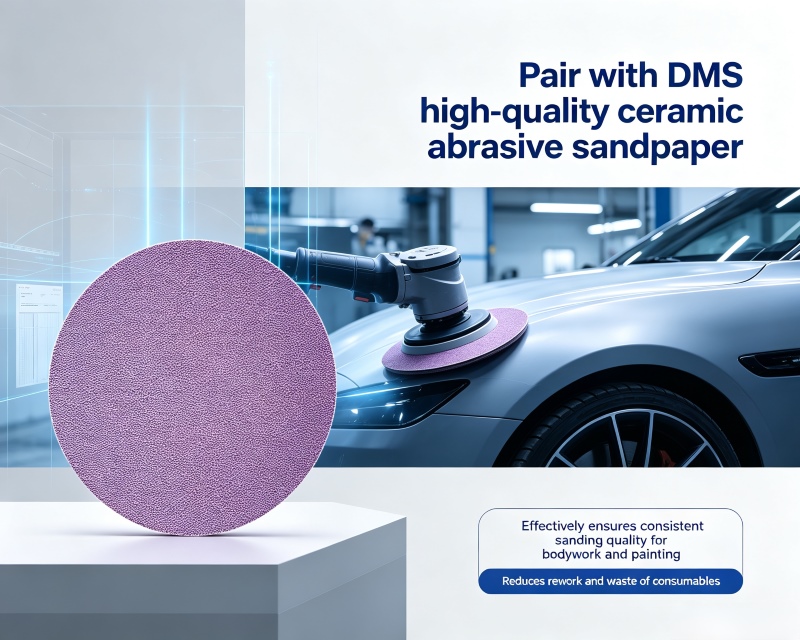
If heat generation issues persist after making the above adjustments, consider whether the abrasive type is suitable for the current operating conditions. Ordinary aluminum oxide abrasives do not shed on their own after becoming dull, making them prone to a cycle of dulling, friction, and temperature rise. Ceramic abrasives, on the other hand, possess self-sharpening properties: as microcrystals become dull, they fracture microscopically to expose new cutting edges. This allows them to maintain a longer cutting window during continuous machine grinding, resulting in relatively stable heat generation. The editorial team at DMS recommends that before purchasing, you conduct comparative tests using a small number of samples at the same workstation. Observe the effective grinding duration of a single sheet of machine sandpaper and the temperature rise of the workpiece before deciding whether to replace them in bulk.
Related News
- Replacing Ceramic Abrasive Sandpaper? Don't Skip These Sanding Pad Checks
- Reduce Clogging, Improve Efficiency: Automotive Sandpaper and Dust Extraction
- A Practical Guide to Low-grit Sandpaper Selection for Metal Sanding
- Assessing a Sandpaper Factory: Stable Supply and Modification of Aluminum Oxide Sandpaper Automotive
- Why Ceramic Abrasive Wet-Sanding Sandpaper Excels on Soft Varnish
- Paint Finishing with High-Grit Sandpaper: Selection Criteria and Progression Tips
Leave me a message