How Masking Tape Innovations Are Improving Surface Protection in Modern Manufacturing?
Surface protection has become a core requirement as modern manufacturing shifts toward higher precision, faster assembly cycles, and stricter quality benchmarks. In sectors ranging from automotive refinishing to consumer electronics, technicians increasingly rely on engineered masking materials that perform consistently under heat, abrasion, and chemical exposure. Drawing on years of hands-on production experience at our factory, we have seen how innovations within this category reshape workflows and reduce rework. The growing focus on reliable Masking Tape has also encouraged manufacturers to revisit the performance of adhesives, paper backings, and temperature resistance to achieve stable protection across various substrates.
How Engineering-Grade Backings Improve Material Stability
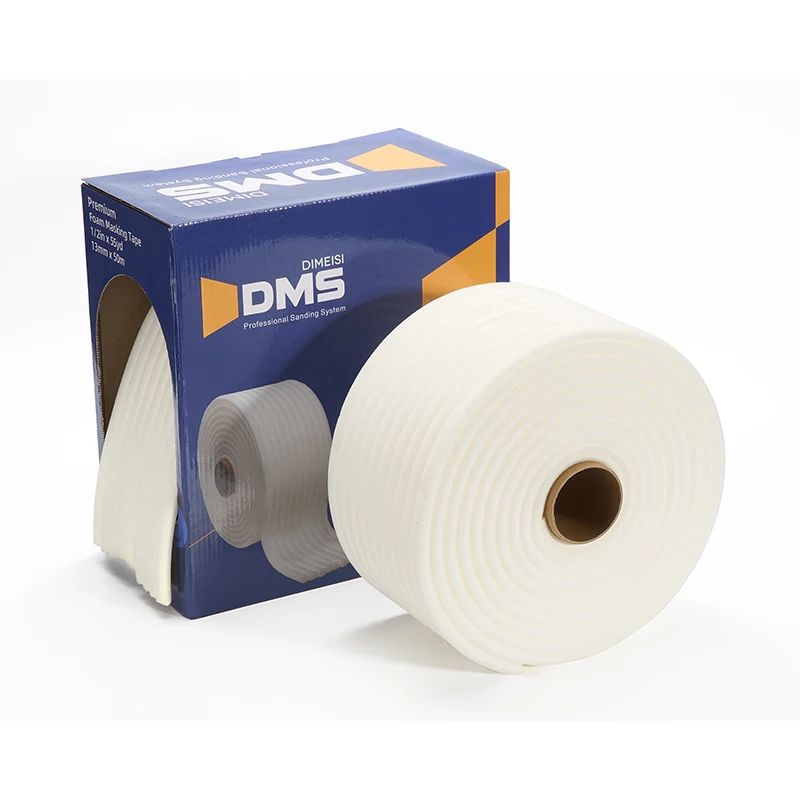
One of the most meaningful advancements in this field is the improvement of backing materials. In earlier decades, conventional crepe paper was considered adequate, but modern operations require more dimensional stability during extended masking cycles. Many of the operators we collaborate with emphasize how predictable tear behavior and tensile strength significantly affect paint lines and material handling. As part of the development process at our factory, reinforced paper fibers are tested across humidity changes and thermal environments to ensure they remain stable on metal, plastic, or composite surfaces. Dongguan King Abrasives Co., Ltd. also integrates a proprietary curing step designed to improve moisture control without making the paper brittle. These design choices reduce edge lifting, a common problem in fast-paced paint shops relying heavily on Masking Tape for consistent edges.
Adhesive Chemistry and Clean Removal Performance
The adhesive layer has evolved from a simple bonding medium into a fully engineered component. Today’s manufacturers expect clean removal even after hours of heat exposure, and that requirement has driven significant research into rubber-based formulas. Our engineering team has repeatedly found that the relationship between tack, holding force, and thermal endurance determines whether a tape performs well on intricate contours. This is especially relevant when operators must maintain clean boundaries alongside irregular geometries. One formulation developed by our factory was designed for low-residue behavior at elevated temperatures, allowing technicians to reposition the Masking Tape without tearing fibers or leaving adhesive marks that can interfere with finishing coats.
Key Parameters of Our Industrial Masking Solutions
To help decision-makers compare performance metrics, the following table summarizes typical parameters tested within our production lines. These values are based on controlled evaluations and reflect baseline expectations for industrial-grade materials produced by Dongguan King Abrasives Co., Ltd.
| Parameter | Description | Typical Range |
| Backing Strength | Measured tensile strength under linear load | 22 to 30 N per 25 mm |
| Adhesive Tack | Initial bonding force required for stable contact | Medium to high grade |
| Temperature Resistance | Maximum temperature sustained without deformation | 80 to 120 degrees Celsius |
| Moisture Stability | Performance in high humidity environments | Low expansion, minimal edge lift |
Thermal Endurance for Advanced Coating Applications
High-temperature coating environments demand consistent adhesion even when heat cycles fluctuate. Many automotive workshops formerly relied on multi-layer masking methods to compensate for inadequate thermal endurance. With the most recent developments tested by our team, technicians can now complete single-pass masking, which saves labor and reduces waste. High-temperature Masking Tape formulations are tailored to maintain flexibility and bonding strength throughout curing ovens and rapid-cooling phases. Our field technicians often report that the improved thermal tolerance directly contributes to cleaner surface transitions, especially on alloy components requiring precise paint boundaries.
How Precision Masking Enhances Digital Fabrication and Electronics Manufacturing
Digital fabrication lines, especially those used for circuit assembly, robotic painting, and component encapsulation, require extremely stable masking materials. A minor adhesive inconsistency can lead to coating infiltration or surface defects detectable even under moderate inspection. Engineers in these sectors increasingly prefer controlled unwinding behavior and low elongation parameters. Our factory adapted several of its coating methods to ensure uniform adhesive distribution, reducing the risk of streaking or microscopic surface irregularities. When applied to electronics housings or connector assemblies, Masking Tape becomes more than a temporary protector; it becomes an essential alignment and spacing component during multi-step bonding operations.
Precision Grades and Specialized Tape Variants
Engineers frequently request specialized variants designed for ultra-clean paint lines, chemically resistant operations, and delicate surfaces prone to imprinting. Our production facilities offer multiple coating thicknesses and refined crepe densities that ensure predictable stretching behavior during manual application. Dongguan King Abrasives Co., Ltd. also conducts peel-force evaluations across different material substrates to confirm compatibility. These precision-focused developments allow technicians in aerospace, transportation equipment, and industrial machinery sectors to achieve higher repeatability. In many cases, Masking Tape variants serve as alignment references, spacing markers, or protective barriers during intermediate sanding tasks.
Specifications Overview of Our Industrial Tape Solutions
The following table highlights material options commonly offered to customers requiring consistent surface protection standards. These options are produced using calibrated lines operated by our factory to maintain uniform quality.
| Material Option | Core Feature | Recommended Application |
| High Precision Crepe | Low elongation and stable tear profile | Automotive detail masking |
| Solvent Resistant Paper | Improved bonding during chemical exposure | Electronics and coatings |
| High Temperature Grade | Stable under curing ovens | Industrial painting ovens |
| Low Residue Variant | Minimal adhesive transfer | Delicate surface protection |
Why Manufacturing Facilities Are Upgrading Their Masking Processes
Across the manufacturing sector, process engineers seek reliable, repeatable, and cleaner masking solutions. Increased automation has reduced tolerance for inconsistencies, and manual refinishing work is increasingly expensive. Dongguan King Abrasives Co., Ltd. continues to refine coating technologies and adhesive formulas that align with these demands. Many of the innovations we implement come from direct conversations with technicians who operate in high-throughput environments. By combining their practical insights with structured testing routines conducted at our factory, we provide masking solutions engineered to support efficient workflows and long-term surface protection. Masking Tape plays a central role in these improvements as manufacturers standardize application techniques across multiple production lines.
Frequently Asked Questions
Q1; How does thermal resistance influence Masking Tape performance during high-temperature finishing?
Thermal resistance determines whether the adhesive maintains consistent bonding force when exposed to curing ovens, heat guns, or warm substrates. If the adhesive softens excessively, edges can curl or shift, causing imprecise coating boundaries. A tape engineered for stable heat tolerance will preserve clean lines and allow technicians to maintain predictable protection during extended high-temperature cycles.
Q2: What factors determine clean removal after prolonged masking cycles?
Clean removal depends on adhesive stability, backing stiffness, and surface preparation. When adhesive chemistry is balanced correctly, the tape lifts without fiber separation or residue transfer even after several hours of exposure to heat or humidity. Backing integrity also plays an important role because dimensional distortion can cause tearing during removal.
Q3: Why do different substrates require different adhesive strengths for optimal masking?
Each substrate has a unique surface energy level, which influences how well adhesives can form bonds. Metals, plastics, and composite surfaces respond differently to pressure and temperature. Selecting the appropriate adhesive strength ensures the tape bonds securely enough to protect the surface yet removes cleanly without damaging coatings or leaving residue.
Conclusion
Advancements in masking materials continue to elevate surface protection standards across manufacturing industries. Through improved adhesive chemistry, stabilized backings, and precision-grade variants, technicians now achieve more consistent results with less manual correction. Our engineering team remains committed to refining these materials and supporting manufacturers seeking higher efficiency and cleaner finishes. To learn how our factory can support your production workflow with advanced masking solutions, contact us today for detailed specifications and tailored recommendations.
Related News
- Getting Wave Marks? Issues to Check When Using Pneumatic Sandpaper
- What Are the Benefits of Eco-Friendly Ceramic Sandpaper for Low-Dust Sanding?
- What Leads to Peeling of the Waterproof Coating on Wet Sandpaper? Key Usage Tips
- Ceramic Sandpaper vs Silicon Carbide Sandpaper: How to Pick for Your Grinding Job
- Why Anti Static Fine Sandpaper Matters in Electronics Manufacturing
- Is Porous Dust-Collecting Automotive Sandpaper Worth the Switch?
Leave me a message